
Air conditioning cooling/heating methods
1. Semiconductor cooling/heating
(1) Semiconductor refrigeration is also called electronic refrigeration, or thermoelectric refrigeration
The basic principle is: the basic component of the semiconductor refrigerator is a thermocouple pair, that is, an N-type semiconductor and a P-type semiconductor are connected to form a thermocouple. After DC power is supplied, a temperature difference and heat transfer will occur at the interface. Several pairs of semiconductor thermocouples are connected in series on the circuit, and the heat transfer is in parallel. In this way, a common refrigeration thermopile is formed. With the help of various heat transfer methods such as heat exchangers, the hot end of the thermopile continuously dissipates heat and maintains a certain temperature, while the cold end of the thermopile is placed in the working environment. Absorbing heat and cooling is the principle of semiconductor refrigeration.
(2) The temperature difference range of the semiconductor refrigeration chip can be realized from a positive temperature of 90°C to a negative temperature of 130°C.
From a comparison of the maturity of air-conditioning technology and energy utilization efficiency, for electric vehicle air-conditioning systems based on semiconductor refrigeration chip technology, currently the thermoelectric material has a low coefficient of merit, the refrigeration performance is not ideal, and the output of the thermopile is affected by the elements that constitute the thermoelectric element. Due to production limitations, electric vehicle air conditioners do not meet the energy-saving and high-efficiency requirements, which makes electric vehicle air conditioners more inclined to use energy-saving and efficient heat pump air conditioners. This technical solution is more versatile for different types of electric vehicles and requires less changes in the structure of the entire vehicle. Small size is the future development trend of electric vehicle air conditioners.
2. Heat pump air conditioning system cooling/heating
(1) The heat pump air conditioning system is improved on the original fuel vehicle. The compressor is directly driven by a permanent magnet brushless DC motor. The working principle diagram of the system is as shown in the figure.

(2) At present, the biggest problem of heat pump electric vehicle air conditioners is low-temperature heating. This problem has been solved from the following perspectives: developing more efficient DC rotary compressors and developing silicon electronic expansion devices with more accurate and energy-saving control. The valve adopts a high-efficiency subcooled parallel flow condenser and improves the micro-channel evaporator structure to make the refrigerant evaporate more evenly. The automobile air conditioning heat pump system is relatively similar to ordinary household air conditioners, and is an extension of the usage scenarios of ordinary household air conditioners.
3. Parking heater heating
The working principle of the parking heater: the remote control or timer gives a start signal to the ECU, the metering oil pump pumps oil from the fuel tank and pulses the fuel to the metal felt in front of the combustion chamber, and the pen-shaped igniter heats to about 900°C , vaporize the small splashed oil droplets, the air is sucked in by the combustion air blower, mixed with gasoline and ignited, the flame transfers heat energy to the engine coolant, the electric circulating water pump pushes the coolant to circulate into the radiator in the evaporation box, and the blower sucks it The cold air in the car is passed through the radiator, and the heated air is blown into the car.
4. Electric heating method of PTC heater
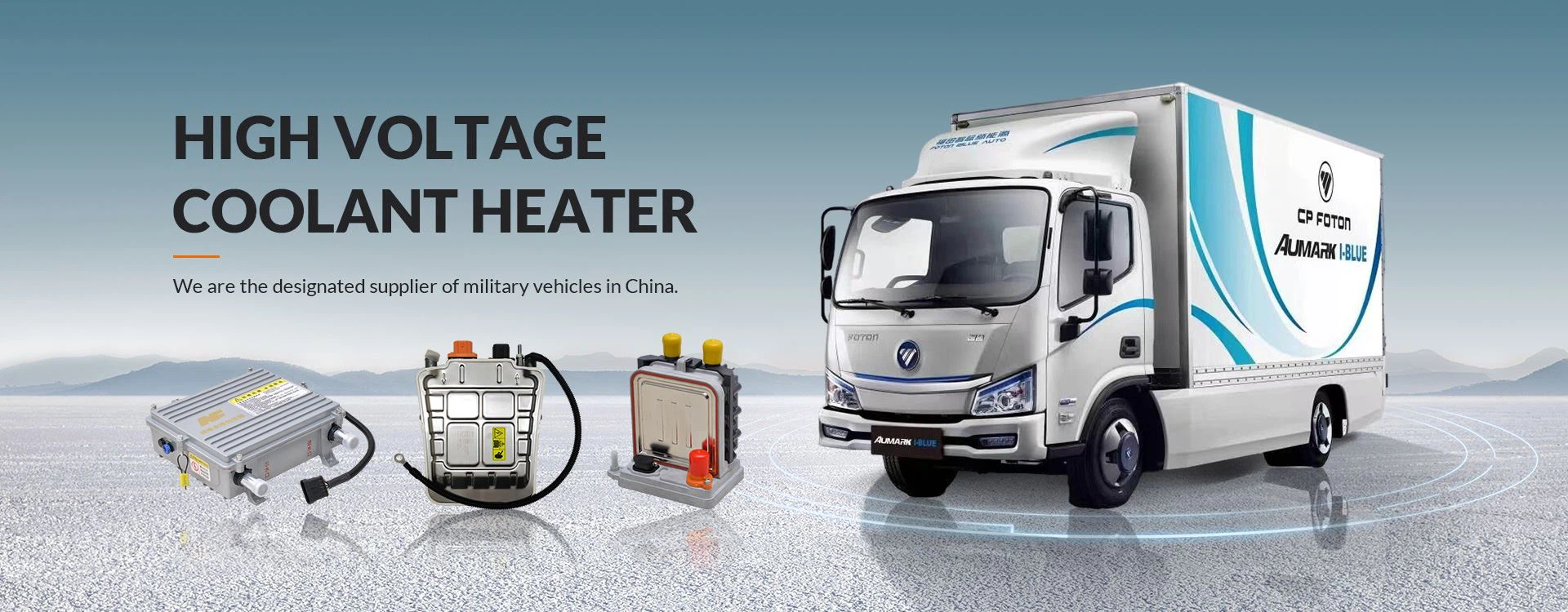
If the electric vehicle adopts the electric heating method of the heater, the heater is usually placed under the floor between the driver's seat and the passenger seat. The heater is composed of a PTC (Positive Temperature Coefficient) heater element that can be heated electrically, which will provide The heat is transferred to the cooling agent (coolant), including the cooling fan, the cooling agent flow path, and the control base plate. Since the heater is required to have high heating performance, the power supply uses a lithium-ion rechargeable battery that drives the motor. high voltage instead of the auxiliary battery (12V). If it is a pure electric vehicle (EV)-specific product, you can also directly use a blower to blow warm air heated by the PTC heater without using coolant.


