Cockpit Thermal Management Overview
The air conditioning system is the key to automobile thermal management. Both drivers and passengers want to pursue the comfort of the car. The important function of the automobile air conditioner is to achieve a comfortable driving environment by adjusting the temperature, humidity and wind speed in the passenger compartment. and riding environment. The principle of mainstream automobile air conditioning is to cool or heat the temperature in the cabin through the thermal physics principle of evaporation, heat absorption and condensation. When the outside temperature is low, it can deliver heated air into the cabin so that the driver and passengers do not feel cold; when the outside temperature is high, it can deliver low-temperature air into the cabin to make the driver and passengers feel cooler. Therefore, car air conditioning plays a very important role in air conditioning in the cabin and comfort of the passengers.
1.1 Traditional fuel vehicle air conditioning system and working principle
Traditional fuel vehicle air conditioners are mainly composed of four components: evaporator, condenser, compressor, and expansion valve. The compressor is a power device that can compress low-temperature and low-pressure gaseous refrigerant into high-temperature and high-pressure gaseous refrigerant. Compressors are generally installed on the engine of fuel vehicles, and the compressor is driven by the engine to work.
The evaporator is a heat exchange device installed in the cabin. The working principle of the evaporator is to use evaporation to absorb heat and thereby reduce the temperature. When the low-temperature and low-pressure liquid refrigerant passes through the evaporator, the liquid refrigerant vaporizes and absorbs the heat in the cabin, thereby quickly cooling the cabin.
The condenser is also a heat exchange device installed outside the cabin. The working principle of the condenser is to absorb heat through condensation and thereby increase the temperature. When the high-temperature and high-pressure gaseous refrigerant passes through the condenser, it is forced to cool by a fan and releases the heat to the outside air. , converting high-temperature and high-pressure gaseous refrigerant into medium-temperature and high-pressure liquid refrigerant.
The expansion valve is a device that expands medium-temperature and high-pressure liquid into low-temperature and low-pressure liquid. The expansion valve is generally installed at the entrance of the evaporation box. It expands the medium-temperature and high-pressure liquid refrigerant into low-temperature and low-pressure liquid refrigerant, allowing the refrigerant to enter the evaporation box. to absorb the heat in the cabin.
Car air conditioners consist of a refrigeration system, a heating system and a ventilation system. These three systems make up the car air conditioner assembly. The principle of traditional fuel vehicle refrigeration is the four steps of compression, condensation, expansion, and evaporation, as shown in Figure 1. By repeating these four steps, the operation of the refrigeration system can be guaranteed. Then the evaporator box continues to cool the cabin.

Figure 1
The principle of heating a traditional fuel vehicle is to use the waste heat of the vehicle engine to heat the vehicle cabin. First, the higher-temperature cooling water coming out of the engine cooling water jacket enters the warm air core, and the cold air is blown through the warm air through the fan. Core, the heated air can be blown into the cabin for cabin heating or window defrosting. After the cooling water leaves the heater, it returns to the engine to complete a cycle.
1.2 New energy vehicle air conditioning system and working principle
Since the driving devices of new energy vehicles and traditional fuel vehicles are different, the air conditioning compressor of fuel vehicles is driven by the engine, and the air conditioning compressor of new energy vehicles is driven by the motor. Therefore, the air conditioning compressor on the new energy vehicle cannot be driven by the engine, and it will An electric compressor is used to compress the refrigerant. The basic principle of new energy vehicles is the same as that of traditional fuel vehicles. They use condensation heat release and evaporation heat absorption to cool the passenger compartment. However, the compressor is changed to an electric compressor. Currently, scroll structure compressors are mainly used to compress the refrigerant.
The heating mode of new energy vehicles is very different from that of traditional fuel vehicles. Because the heating mode of traditional fuel vehicles is to transfer the waste heat of the engine to the cabin through the coolant to heat the cabin, but new energy vehicles do not exist without an engine. The engine heats the cabin. Therefore, new energy vehicles use other heating modes to heat the cabin. The following are several ways of air conditioning and heating for new energy vehicles.
(1) Semiconductor heating system: The semiconductor heater is composed of semiconductor components and terminals to perform cooling and heating functions. In this system, the thermocouple is the basic component for cooling and heating. Its structure is shown in Figure 2. Two semiconductor devices are connected to form a thermocouple, and after DC current is applied, heat and temperature difference will be generated at the interface to heat the interior of the cabin. The main advantage of semiconductor heating is that it can quickly heat the cabin. The main disadvantage is that semiconductor heating consumes a lot of electricity. For new energy vehicles that need to pursue mileage, its shortcomings are fatal. Therefore, it cannot meet the requirements of new energy vehicles for air conditioning energy saving. It is also more necessary for people to conduct research on semiconductor heating methods and design an efficient and energy-saving semiconductor heating method.

Figure 2
1—Electrical insulation layer; 2—Object to be cooled; 3—Metal sheet; 4—N-type semiconductor; 5—Metal sheet; 6—Heated object; 7—Electrical insulation layer; 8—P-type semiconductor
(2) Positive Temperature Coefficient (PTC) air heating: The main component of PTC is the thermistor, which is heated by electric heating wire and is a device that directly converts electrical energy into thermal energy. The PTC air heating system turns the warm air core of a traditional fuel vehicle into a PTC air heater. It uses a fan to drive the outside air to be heated through the PTC heater, and sends the heated air into the interior of the cabin to heat the cabin. It directly consumes electricity, so when the heater is turned on, the energy consumption of new energy vehicles is also relatively large.


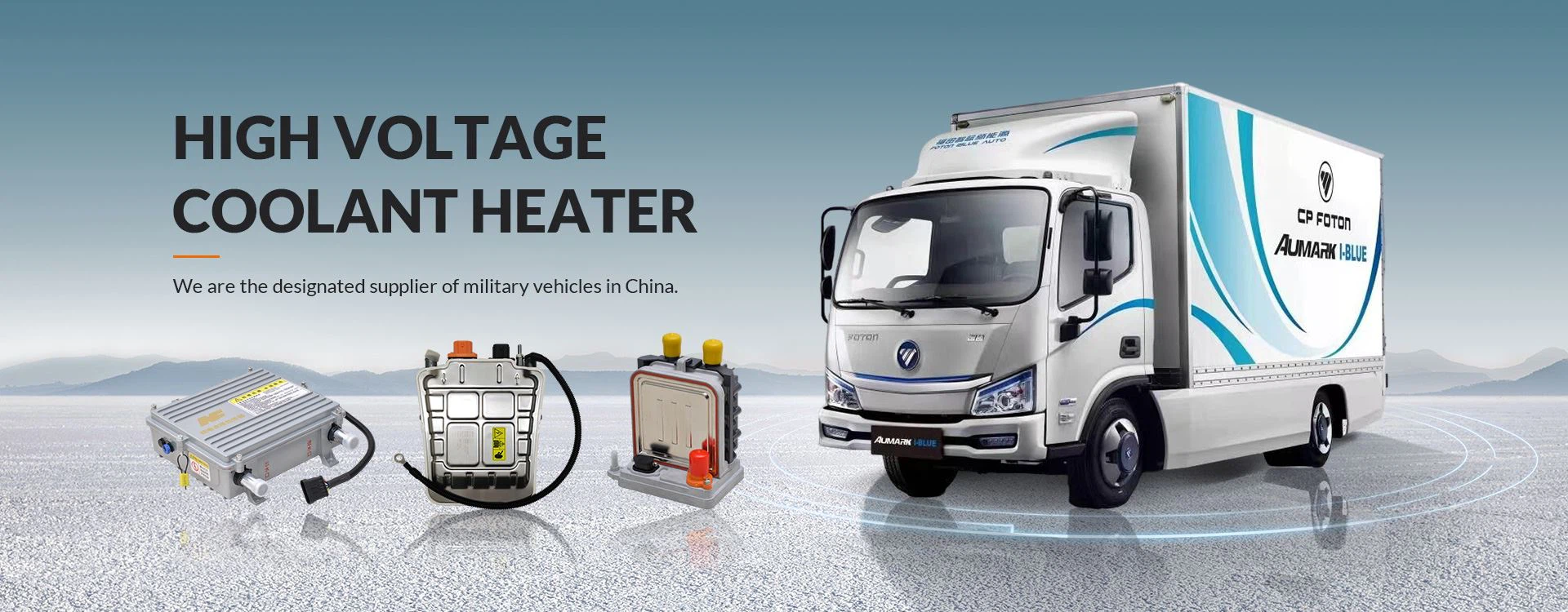
(3) PTC coolant heater: PTC coolant heater and PTC air heater both generate heat through the consumption of electricity, but the water heating system first uses PTC to heat the coolant. After the coolant is heated to a certain temperature, the coolant is pumped into The heater core exchanges heat with the surrounding air, and the fan sends the heated air into the cabin to heat the cabin. The cooling water is then heated through the PTC and circulates back and forth. This heating system is more reliable and safer than PTC air cooling.


(4) Heat pump air conditioning system: The principle of the heat pump air conditioning system is the same as that of the traditional automobile air conditioning system, but the heat pump air conditioner can realize the conversion of cabin heating and cooling. It uses a four-way reversing valve to change the flow direction of the refrigerant in the system, thereby achieving cooling. The process of heat exchange. Since heat pump air conditioners do not directly consume electricity to generate heat, heat pump air conditioners are more energy-saving than PTC heaters. Currently, heat pump air conditioners have been mass-produced on some vehicles.