[Compressor] Protecting the "Heart" of Your Car's
Thermal Management System!
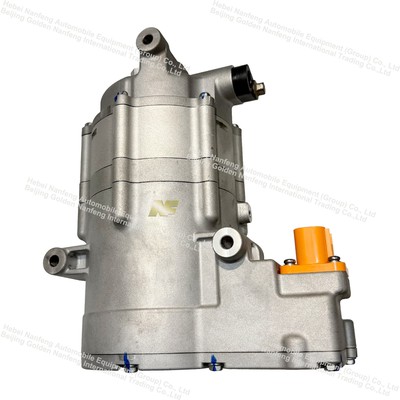
When driving, our most direct and comfortable experience relies on a constant temperature inside the car-cool in the sweltering heat and warm in the freezing winter. Behind this lies a silently operating "core hero": the car's compressor. As the "heart" of the car's thermal management system, it shoulders the crucial mission of compressing refrigerant and driving thermal circulation. A malfunction can not only cause the air conditioning to fail but may also paralyze the entire thermal management system, affecting driving safety and the vehicle's lifespan.
If we compare the car's thermal management system to a "circulatory system," then the compressor is like the "heart," and the refrigerant is the "blood."
Its core function is to draw in low-temperature, low-pressure gaseous refrigerant, compress it into a high-temperature, high-pressure gas, and then deliver it to the condenser for cooling. After passing through the expansion valve for throttling and pressure reduction, it enters the evaporator to absorb heat from the car's interior, ultimately achieving cooling. In heating mode, the compressor also participates in the circulation, helping to improve heating efficiency and ensuring the interior temperature quickly reaches the set value.
Simply put, without the proper functioning of the compressor, a car's air conditioning system loses its "power source for cooling/heating," and the thermal management system cannot transfer and regulate heat. More importantly, the compressor's operating status directly affects the vehicle's energy consumption and power output-if the compressor malfunctions, such as jamming or leaks, it can lead to increased engine load, higher fuel consumption, and even insufficient power.
Core Performance Testing: Ensuring Efficient Operation and Reducing Vehicle Energy Consumption
Cooling/Heating Performance Testing: Simulating different vehicle operating conditions (high temperature, low temperature, idling, high speed) to accurately test the compressor's cooling and heating capacity, determining whether it meets design requirements, ensuring cabin comfort and battery temperature control accuracy, while optimizing energy consumption performance.
Operating Efficiency Testing: Testing the compressor's input power and COP (Coefficient of Performance) to evaluate its energy conversion efficiency, helping companies optimize product design and create low-energy, high-efficiency compressor products;
Flow and Pressure Testing: Testing the compressor's refrigerant/coolant flow rate and inlet/outlet pressure to ensure stable circulation system pressure and prevent compressor wear or system leaks due to abnormal pressure;
Speed and Noise Testing: Testing the compressor's operating speed and noise levels under different operating conditions to ensure stable speed and noise levels meet industry standards, improving driving comfort.

2. Reliability Testing: Ensuring Long-Term Stability Under Extreme Operating Conditions
Environmental Adaptability Testing: Simulating extreme environments such as extreme cold, extreme heat, and coastal humidity through high and low temperature cycling, damp heat alternation, and salt spray corrosion testing, the compressor's start-up performance and operational stability are tested to prevent component aging and failure due to temperature and humidity changes.
Durability Testing: Conducting long-term continuous operation tests and start-stop durability tests, simulating the entire lifecycle of a vehicle, the compressor's wear and sealing performance are tested to ensure its service life meets industry requirements.
Vibration and Shock Testing: Simulating the bumps and impacts experienced during vehicle operation, the compressor's structural stability is tested to prevent internal component loosening and pipe detachment due to vibration, which could lead to malfunctions.
3. Safety Performance Testing: Eliminating Hidden Dangers and Safeguarding Vehicle Safety
Sealing Performance Testing: Utilizing high-precision leak detection technology, a comprehensive inspection of critical components such as the compressor housing, pipe interfaces, and welds is conducted to accurately detect even the smallest leaks, preventing refrigerant and lubricant leaks and avoiding thermal management system failures or safety accidents.
Electrical Safety Testing: For new energy electric compressors, the insulation and withstand voltage performance of the motor are tested to prevent electrical faults from damaging the compressor or even affecting the overall vehicle electrical system safety.
Overload Protection Testing: The compressor's protection mechanisms under overload, overheat, and overpressure conditions are tested to ensure timely shutdown, prevent component burnout, and safeguard the vehicle's thermal management system.