
Detailed Introduction to New Energy Vehicle Components
I. The Three Core Electronic Components: Battery, Motor, and Electronic Control System
1.1 Battery:
Short for power battery system, it refers to an energy storage device that provides electrical energy for the operation of an electric vehicle, consisting of one or more battery packs and corresponding accessories (battery pack circuit breaker unit, high-voltage/low-voltage circuits, thermal management equipment, and mechanical assemblies).
Battery Pack Circuit Breaker Unit (BDU): Divided into internal (passenger cars, light trucks) and external (heavy trucks) units, it includes the BMS controller, MSD, relays, fuses, sensors, high-voltage fuses, etc. It is responsible for the distribution, protection, and management of electrical energy in the power battery pack.
Battery Management System (BMS): Includes hardware, software, and algorithms. It mainly measures and manages cell voltage, current, temperature, and equalization, ensuring battery reliability and safety, and preventing overcharging, over-discharging, short circuits, and overheating.
Battery Thermal Management System: Ensures the power battery is always within a suitable operating temperature range through cooling or heating.

High-voltage wiring harness: The wiring harness connects battery packs to each other and between a battery pack and a high-voltage distribution box, providing high-voltage current connections. It includes a conductor layer, insulation layer, shielding layer, and sheath layer.
Low-voltage wiring harness: The wiring harness used for signal transmission between the battery pack and the high-voltage distribution box.
1.2 Motor:
The core power component that converts the electrical energy from the vehicle's power battery into mechanical energy to drive the vehicle. Currently, the most mainstream motor type for new energy heavy-duty trucks is the permanent magnet synchronous motor. It mainly consists of a stator (coils), a rotor (permanent magnets), and end caps.
1.3 Electronic control:
Motor controller (MCU): A decisive factor in vehicle power performance. It obtains driver requirements from the vehicle controller, receives electrical energy from the power battery pack, and modulates it through its own inverter to achieve precise control of motor mode, speed, and torque. It also has fault diagnosis and protection functions. Currently, standalone motor controllers are mostly installed in non-plug-in hybrid vehicles; in other new energy vehicles, the motor controller is more often a module within an integrated controller.
II. The Three Small Electric Components:
There's no unified industry classification, but in new energy heavy-duty trucks, the three small electric components generally refer to: electronically controlled air compressor, electric hydraulic power steering pump, and air conditioning (electric compressor and PTC heater).
2.1 Electronically Controlled Air Compressor:
Driven by an electric motor, this compressor rotates a piston, compressing air within the cylinder. Its core components are the motor, four compression cylinders, and accessories.

2.2 Electric Hydraulic Power Steering Pump:
Driven by an electric motor, this pump pressurizes the hydraulic oil in the pipeline.

2.3 Electric Compressor:
Driven by an electric motor, this compressor pressurizes the refrigerant. Its working principle is the same as that of a traditional fuel-powered vehicle compressor.

2.4 PTC Heater:
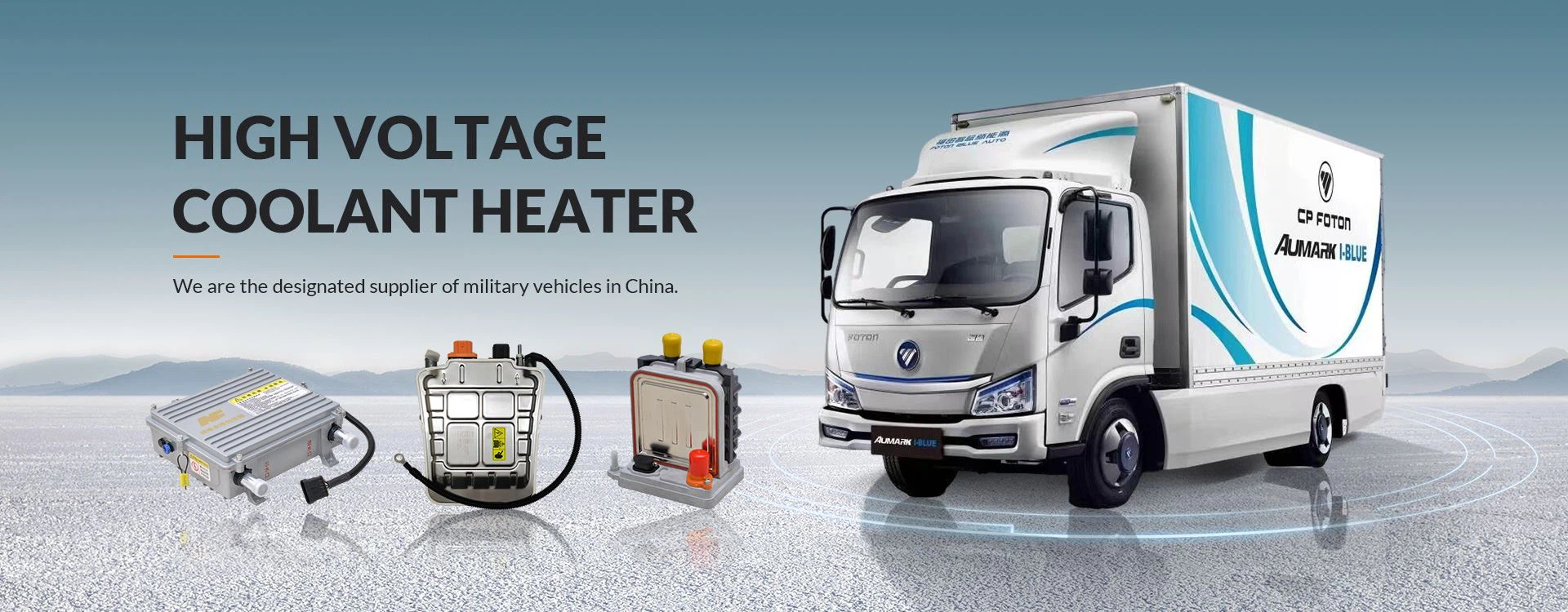
A ceramic heating element converts electrical energy into heat energy. A blower forces air into the gaps of the heating plate, carrying away heat and releasing it into the cab for heating.


