Structure and principle of electric vehicle air conditioning system
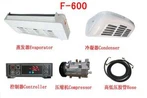
The air conditioning system of pure electric vehicles is basically the same as that of traditional fuel vehicles. It mainly consists of: compressor, condenser, evaporator, cooling fan, expansion valve and high and low pressure pipeline accessories. The difference is that the compressor, the core component used in the air-conditioning system of new energy pure electric vehicles, does not have the power source of traditional fuel vehicles, so it can only be driven by the electric vehicle's own power battery, which requires adding additional components to the compressor. The drive motor, the combination of the drive motor and the compressor, is what we often call the compressor combination.
Control principle of electric vehicle air conditioning system:
The vehicle controller VCU collects the air conditioner AC switch signal, air conditioner pressure switch signal, evaporator temperature signal, wind speed signal and ambient temperature signal, and forms a control signal through calculation and processing, which is transmitted to the air conditioner controller through the CAN bus, and is controlled by the air conditioner controller. The high-voltage circuit of the air-conditioning compressor is switched on and off.
How electric vehicle air conditioning systems work
Refrigeration:
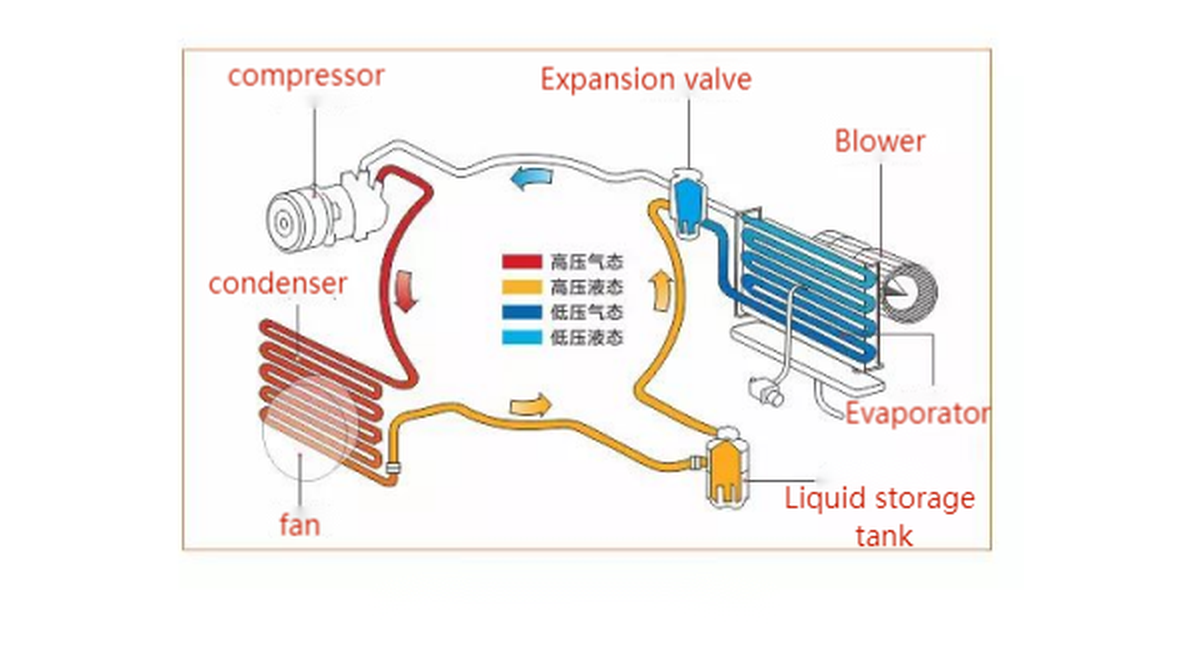
As shown in the figure above, the all-electric air conditioning and refrigeration system mainly consists of ES18 electric variable frequency compressor, condenser, liquid storage dryer, expansion tube, evaporator and connecting pipelines. When the refrigeration system is working, the air conditioning inverter provides AC power to drive the electric variable frequency compressor to work. The electric variable frequency compressor sucks in low-temperature and low-pressure gaseous refrigerant from the low-pressure pipeline, compresses it into high-temperature and high-pressure gaseous refrigerant (compression process), and then passes through the high-pressure pipeline. Entering the condenser, after being cooled by the condenser, it turns into a high-temperature and high-pressure liquid refrigerant (condensation process). It is sent to the liquid storage dryer. After drying and filtering, it flows into the expansion tube through the high-pressure pipeline and passes through the small hole section of the expansion tube. flow, becomes a low-temperature, low-pressure mist-like liquid/gas mixture (cooling and pressure reduction), and is sent to the evaporator, where the refrigerant expands, evaporates, absorbs a large amount of heat, and vaporizes into a low-temperature and low-pressure gaseous refrigerant (evaporation absorbs heat process), it is sucked back into the electric variable frequency compressor for recirculation. During this process, the blower continuously blows the cold air on the surface of the evaporator into the car to achieve the purpose of cooling.

Heating:
As shown in the figure, the heating system mainly consists of a heater tank, an electric coolant pump, a PTC (positive temperature coefficient) heater and a blower. When the hybrid engine coolant temperature is higher than the specified temperature, the DC inverter drives the electric coolant pump to pump the engine coolant into the heater tank to heat the surrounding air, and the blower blows the heated hot air into the inside the car. The coolant cools down and returns to the engine through the radiator. When the hybrid engine coolant temperature is lower than the specified temperature, the coolant cannot provide enough heat or cannot provide heat. At this time, the PTC heater heats the air, and the blower blows the heated hot air into the car.