The difference between a thick film heater and a PTC electric heater
The heating system of new energy vehicles is crucial to battery performance, ride comfort, and energy consumption. Thick film heaters and PTC electric heaters are two mainstream technologies, and their differences are mainly reflected in the following aspects:


1. Working principle and materials
(1) Thick film heater: A ceramic substrate (such as alumina or aluminum nitride) is used. The resistor paste (silver, palladium, etc.) is attached to the substrate through a screen printing process and sintered at high temperature to form a heating circuit. Its resistance value is stable and it generates heat through direct conduction.
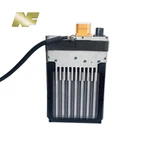
(2) PTC heater: With a positive temperature coefficient (PTC) ceramic material (such as barium titanate) as the core, the resistance increases sharply when the temperature rises, realizing the self-limiting temperature function without the need for an additional temperature control circuit.
2. Performance characteristics
(1) Heating efficiency: Thick film heaters have low thermal inertia and fast heating (up to 200°C/s), which are suitable for fast response scenarios; PTCs heat more slowly and have slightly lower efficiency.
(2) Temperature control: Thick film requires external sensors and control systems to achieve precise temperature control; PTCs have high safety but low adjustment flexibility due to their self-limiting temperature characteristics (usually limited to 150-250°C).
(3) Volume and weight: Thick film structures are lighter and thinner (thickness can be <1mm), which makes them suitable for areas with limited space; PTCs have a larger volume due to their ceramic block structure.
3. Reliability and lifespan
(1) Thick film heater: High temperature resistance, strong corrosion resistance, long life (up to more than 100,000 hot and cold cycles), but process defects may cause local overheating.
(2) PTC heater: High stability, not easy to overheat, but long-term use may lead to reduced efficiency due to ceramic aging.
4. Cost and application scenarios
(1) Thick film heater: complex process, high unit cost (about 20-30% higher), mostly used for high-end models or precise heating of battery packs.
(2) PTC heater: low cost, mature technology, widely used in passenger compartment heating systems and mid- and low-end models.
5. Energy consumption comparison
The electric energy conversion efficiency of a thick film heater is > 95%, which is higher than 85-90% of PTC, but it has higher requirements for control circuits, and the comprehensive energy consumption advantage requires system matching.
Summary: Thick film heaters are known for their high efficiency, lightness, and long life, and are suitable for high-precision demand scenarios; PTCs are dominated by low cost and high safety. As new energy vehicles increase their energy efficiency requirements, the penetration rate of thick film technology has gradually expanded, but PTCs still dominate the mid- and low-end markets.