
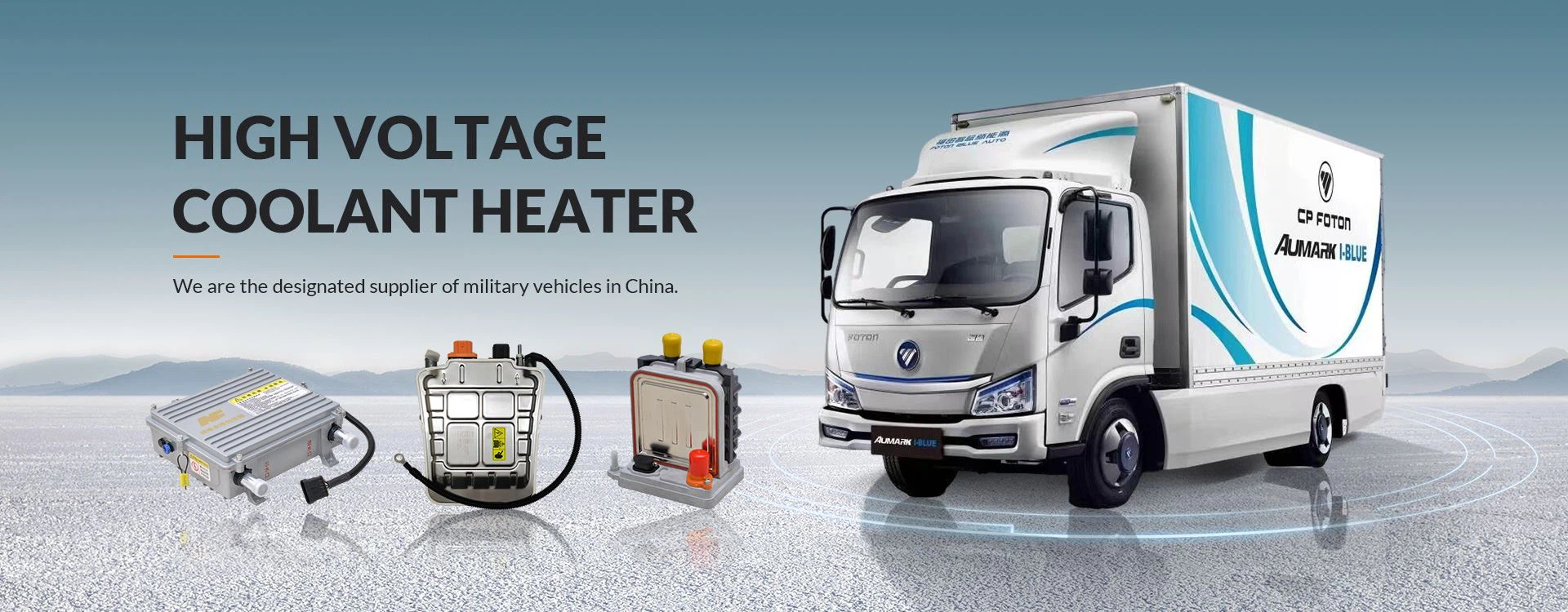


New energy vehicle thermal management system
Automotive thermal management system
Automotive thermal management is based on the perspective of the entire vehicle, by coordinating the matching, optimization and control of the vehicle's engine (traditional or hybrid), air conditioner, power battery, motor and other related components and subsystems, in order to effectively solve the thermal problem of the entire vehicle. Related issues enable each functional module to be in the optimal temperature range to improve the economy, power and safety of the vehicle. Since there are some differences between traditional fuel vehicles and new energy vehicles in terms of power sources, working modes, etc., the vehicle thermal management systems are also different.
Thermal management of traditional fuel vehicles
According to the division of vehicle space area, the thermal management of traditional fuel vehicles can be divided into two parts: power system thermal management and cabin air conditioning thermal management.
Power system thermal management
Mainly composed of engine and transmission. Engine thermal management is the focus of traditional automobile thermal management. It releases the heat generated during engine operation through the engine cooling system in an air-cooled or liquid-cooled manner to prevent the engine from overheating and malfunctioning under high-load operating conditions.
Thermal management of cabin air conditioning system
When the cabin needs heating, the waste heat generated by engine operation is used to manage the thermal cycle of the cabin at low temperatures through the thermal management system. In hot and high-temperature environments, the cooling function of the cabin is achieved through the refrigeration of the air-conditioning refrigerant to provide a comfortable environment for the passengers.
New energy vehicle thermal management system
Thermal management of new energy vehicles
According to the division of vehicle space area, the thermal management of new energy vehicles mainly includes three parts: power system thermal management, cabin air conditioning thermal management, and drive control thermal management. Different from traditional cars, in pure electric models of new energy vehicles, since there is no heat provided by the engine, the air conditioning and heating function of the cabin cannot be realized through engine heat exchange, and can only be achieved through PTC or heat pump air conditioning. adjust. For new energy hybrid models, due to the retention of the internal combustion engine, cabin heating can be achieved by using engine waste heat plus PTC or heat pump air conditioning to work together. Compared with traditional fuel vehicles, new energy vehicles have increased cooling requirements for power batteries and motor electronic control systems, so their thermal management systems are more complex.
Power system thermal management
The 'power system' mentioned here specifically refers to the power battery and its subsystems for pure electric models, and for hybrid models, it refers to the power battery and engine system. In the engine system of new energy vehicles, the engine refrigeration technology adopts the same method as that of traditional vehicles. For those with power generation needs, such as extended-range models, a cooling system for the ISG generator needs to be added. This system may be independent or Connect in series/parallel with the drive motor cooling system.
Thermal management of power batteries can be divided into two modes: cooling and heating. Currently, the more common power battery refrigeration methods mainly include: air cooling, liquid cooling, phase change material cooling, heat pipe cooling and direct cooling.
Air cooling: Using air as the heat transfer medium, the power battery is cooled through the air flow movement during the driving of the car or the installation of an exhaust fan. This cooling method has the characteristics of low cost and simple application, but the overall heat dissipation efficiency is not high, the noise is loud and the heat dissipation is uneven.
Liquid cooling: heat exchange through liquid convection to reduce the temperature of the battery. The thermal management system that uses this method for cooling will be smaller than the air-cooled system, and it also has the characteristics of good cooling effect and fast speed. However, due to the presence of liquid, the air tightness of the system is required to be higher. Otherwise there is a risk of leakage.
Phase change material cooling (PCM): When the temperature of the power battery rises, phase change materials such as paraffin, hydrated salts, and fatty acids absorb or release a large amount of latent heat during the phase change process to cool the battery. However, if the phase change material is completely phase-changed, the heat release effect will become worse. Currently, this method is still under research for application in automotive power batteries.
Heat pipe cooling: The battery is cooled through a sealed container or sealed pipe whose two ends are the evaporation end and the condensation end and are filled with a saturated medium (water, ethylene glycol or acetone, etc.). This method can both absorb heat from the battery and heat the battery. However, due to technical complexity, this technology has not yet been applied in mass production.
Direct cooling: Using the principle of latent heat of evaporation of refrigerant (R134a, etc.), an air conditioning system is established in the vehicle or battery system. The evaporator of the air conditioning system is installed in the battery system. The refrigerant evaporates in the evaporator and is quickly and efficiently evaporated. The heat of the battery system is taken away, thereby achieving the purpose of cooling the battery system.


