Latest Products


Contact Us
Hebei Nanfeng Automobile Equipment (Group) Co.,Ltd
Phone: +86 18811334770
Tel: +86 0317 8620396
Tel: +86 010 58673556
Candy Jiao
E-mail: nh.jiao@auto-parkingheater.com
Email: nh.li@auto-parkingheater.com
Add: Room 505, Building B, Free Town Center, No.58, East Third Ring South Road, Chaoyang District, Beijing, 100022, P.R.China
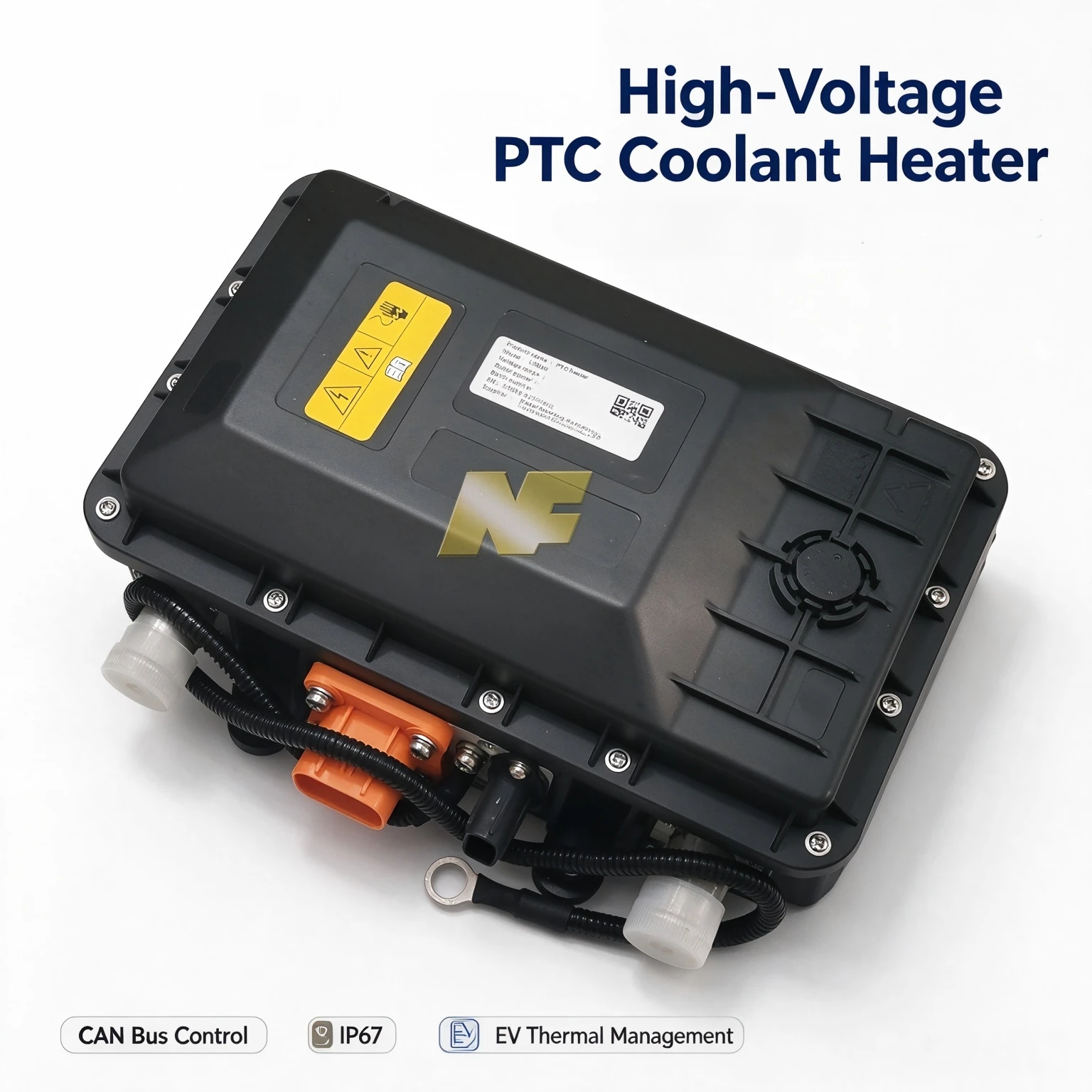

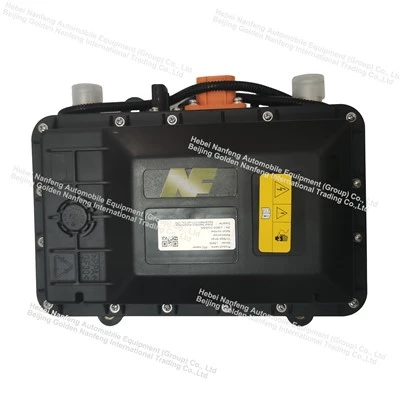


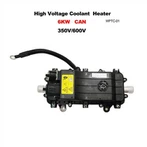
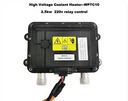
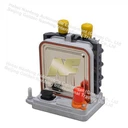
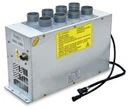
High-voltage PTC Battery Heaters
The high voltage coolant heater is mainly used for heating the passenger compartment ,defrosting and removing fog on the window,or preheating battery thermal management system battery ,to meet the corresponding regulations, functional requirements.
Description
High-Voltage PTC Battery Heaters
Products Description

| Power (KW) | 8KW |
| Rated voltage(V) | 600V |
| Low voltage(V) | 24V |
| Protection Rating |
IP67 |
|
Baud rate |
250K |
|
Working temperature |
-40℃~85℃ |
|
storage temperature |
-40℃~85℃ |
| Control | CAN |
This PTC heater is primarily used for heating the passenger cabin, defrosting and demisting the vehicle windows, or preheating the battery as part of a battery thermal management system, in order to meet relevant regulatory and functional requirements.
Products Specifications

Service life: 8 years or 200,000 km;
Cumulative heating time over the service life: up to 8,000 hours;
Maximum operating duration while powered on: 10,000 hours (with active communication);
Maximum number of power-on cycles: 50,000;
The heater may remain connected to a low-voltage power source (e.g., the vehicle battery) throughout its entire service life, provided the battery is not depleted; the heater will enter sleep mode when the vehicle is turned off;
High-voltage power is supplied to the heater when the vehicle heating mode is activated;
The heater may be installed in the engine compartment, but must not be placed within 75 mm of any component that generates continuous heat and reaches temperatures exceeding 120°C.
Products Key Highlights

1. Inherent Physical Overheat Protection (Primary Advantage)
PTC (barium titanate semiconductor ceramic) exhibits a positive temperature coefficient:
Below the Curie temperature: Resistance is very low, allowing for high-power, rapid heating.
Upon reaching the Curie temperature: Resistance spikes dramatically, causing a sharp, automatic drop in current. This locks the temperature, preventing any further rise.
Even if a fan stops or coolant flow is interrupted (as in automotive PTC liquid heaters), the component itself will not glow red or continue to heat up. The material's intrinsic properties effectively eliminate the risk of fire caused by "dry heating." In contrast, traditional resistive heating wires-if cooling fails-will continue to heat up until they glow red, risking burnout or fire; if their external temperature control system fails, the situation can quickly spiral out of control.
2. Rapid Cold-Start and Dynamic Power Adaptation
At low temperatures, resistance is low, enabling high power output the moment the device is powered on for a fast thermal response.
As the temperature rises, power output automatically decreases until heat generation matches heat dissipation, maintaining a constant temperature.
Traditional resistive heating wires have constant resistance and a fixed power output; they remain at full power, requiring frequent on/off cycling for temperature control, which leads to greater temperature fluctuations.
3. Extended Lifespan and Resistance to Oxidation/Breakage
PTC ceramic heating elements contain no metal filaments, avoiding the oxidation and brittle fractures that plague nickel-chromium heating wires over long-term high-temperature operation. They do not glow red or produce open flames, and accumulated dust is less likely to carbonize or ignite. This ensures superior reliability in high-vibration environments, such as in new energy vehicles or heavy machinery.
4. Uniform Heat Distribution and High Insulation Safety
PTC heaters typically consist of a ceramic substrate paired with aluminum cooling fins or a liquid-cooling structure, providing a large heating surface area and minimizing localized "hot spots."
The ceramic material is inherently insulating, facilitating a design that separates electrical components from water or coolant. This allows for effective high-voltage isolation, making these units ideal for the high-voltage systems found in new energy vehicles (e.g., 300–800V PTC liquid heaters, rated to IP67 standards).
Products Protective function
1. High-voltage overvoltage and undervoltage protection
The working voltage range can be set according to customer requirements. If the heater is not within the range, it will not start or be turned off. If it returns to the range, it will restart softly to the current set value.
2. IGBT drive voltage overvoltage and undervoltage protection
When the IGBT drive voltage is not within the set working range, the heating will be completely turned off, and then soft-start to the current set value after recovery.
3. Low voltage anti-reverse connection protection
Low voltage reverse connection protection does not work.
4. Outlet water temperature over-temperature protection
When the water temperature at the outlet exceeds 105°C for 3 seconds, all heating will be turned off immediately.
5. Short Circuit protection
Any PTC short-circuit, the road immediately closed, repeated detection 5 times, still short-circuit, the road before re-power no longer open heating.
6. Overcurrent protection
If the circuit lasts more than 2 times the rated current for 5S during heating operation, the circuit is considered to be overloaded and will be closed and restarted.
Products installation

Products certification

Products application

High-Voltage Water-Cooled PTC (400V/800V Platforms)
1. Battery Pack Preheating
In low-temperature environments, the activity of lithium-ion batteries drops significantly, and charging power becomes limited. A PTC heater warms the coolant, which circulates through a water-cooling loop to uniformly preheat the battery cells, bringing them into the optimal operating range of 25°C to 40°C. Preheating prior to fast charging is a primary use case. Power range: 1kW–5kW.
2. Cabin Heating (Air-Heating PTC)
Since new energy vehicles lack waste heat from an internal combustion engine, they rely on a high-voltage PTC heater to warm the coolant, which then flows to the HVAC core to heat the vehicle cabin. Power output is typically 5kW–7kW, while for buses or heavy-duty trucks, it can reach 20kW–30kW.
3. Component Thermal Management
This includes preheating oil for electric motors and gear reducers, as well as auxiliary heating for hydrogen fuel cell systems (since fuel cells may not generate sufficient heat on their own, a PTC heater is used during cold starts to warm the coolant and intake air).
Automotive-Grade Advantages: Self-regulating temperature control reduces the risk of fire caused by "dry heating" (overheating without fluid flow); high vibration resistance; multi-stage power output; and compatibility with CAN bus communication for integration with the Battery Management System (BMS) or thermal management controllers.
Low-Voltage Air-Cooled PTC (12V/24V)
Used for auxiliary cabin heating in commercial and construction vehicles, rearview mirror defrosting, and supplemental heating within HVAC air ducts.
Hot Tags: high-voltage ptc battery heaters, China, factory, suppliers, manufacturers, seller, wholesale, quotation, 600v ptc electric coolant heater, 12v high voltage electric liquid heater, 7kw catem ptc coolant heater, voltage heater, 6kw electric parking ptc heater, PTC water ev heater
You Might Also Like