
Are PTC Heaters a New Type of Heating for Hybrids and EV?
Hybrid and electric vehicles have to run their engines frequently in the high efficiency zone, and when the engine cannot be used as a heat source in a purely electric drive situation, the vehicle is left without a heat source. Especially for the temperature regulation of the cabin, an additional heat source is required to ensure comfort and safety. In order to maximise the range of the electric drive and improve fuel efficiency, heat needs to be generated quickly, efficiently and safely with minimal power consumption by the power battery.
The trend towards electric drives and electrical powertrains in the automotive industry has given rise to a wide variety of vehicle concepts. From mild hybrids to full hybrids, range extenders and pure electric vehicles, electrification is gradually increasing while the use of internal combustion engines is declining. With the continuous optimisation of engines, the introduction of advanced control strategies and, increasingly, electric driving, the lack of heat available for temperature regulation of the cabin or power battery due to waste heat generated by the engine or other devices.
Functions and purposes of vehicle heating
1 Main functions and purposes
Cabin heating is an important function to ensure the safe and comfortable operation of the vehicle. In addition to cabin comfort and the temperature inside the vehicle, the air conditioning system (HVAC) must also ensure certain functions including meeting regulatory requirements such as removing more than 80% of the ice from the windscreen after 20 min according to European Regulation 672/2010 and the US Federal Motor Vehicle Safety Standard FMVSS 103. Defrost and de-humidification are 2 other functions required by the regulations. Good temperature regulation of the cab is the basis for comfort and safety, which is an important factor in ensuring that driving is not compromised.
2 Performance indicators
The main requirements for the heater depend on the application of the vehicle and are summarised by the following factors:
(1) maximum efficiency,
(2) low or reasonable costs,
(3) fast and controllable reaction times,
(4) minimum possible package size and light weight,
(5) good reliability,
(6) sustainability and environmental friendliness.

PTC Heater

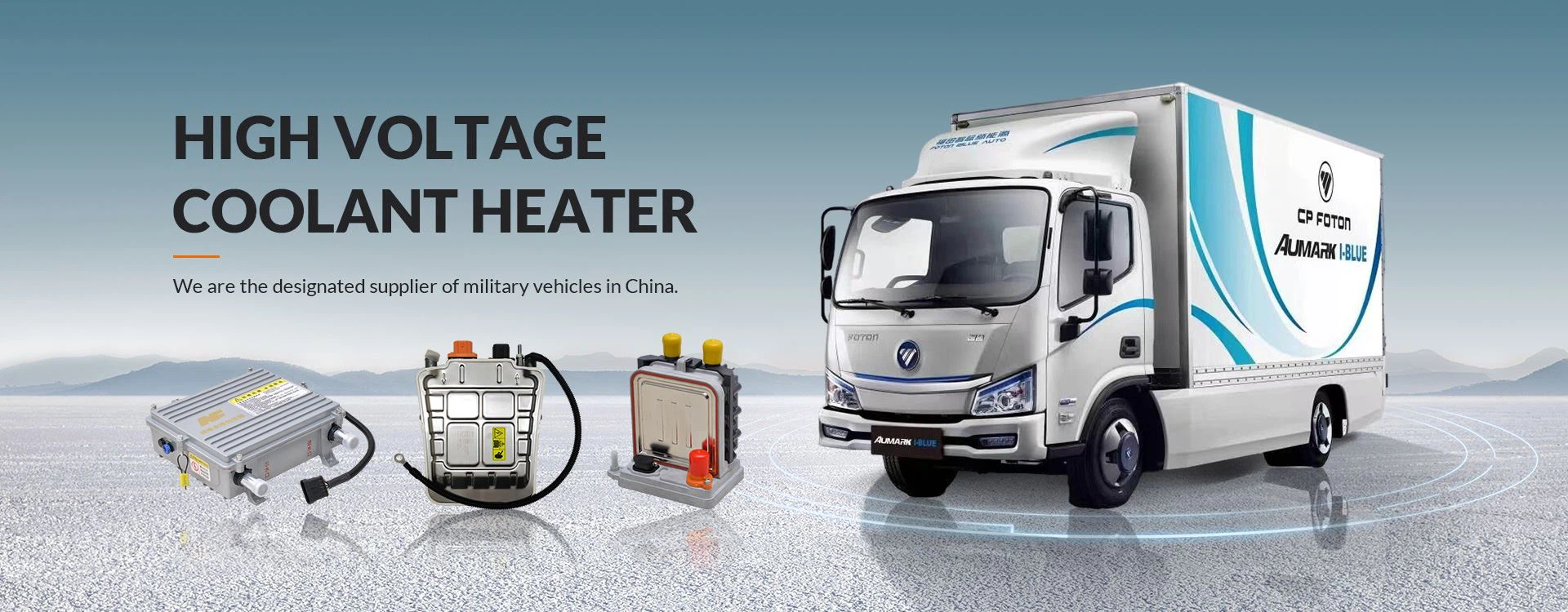
High Voltage Coolant Heater


