
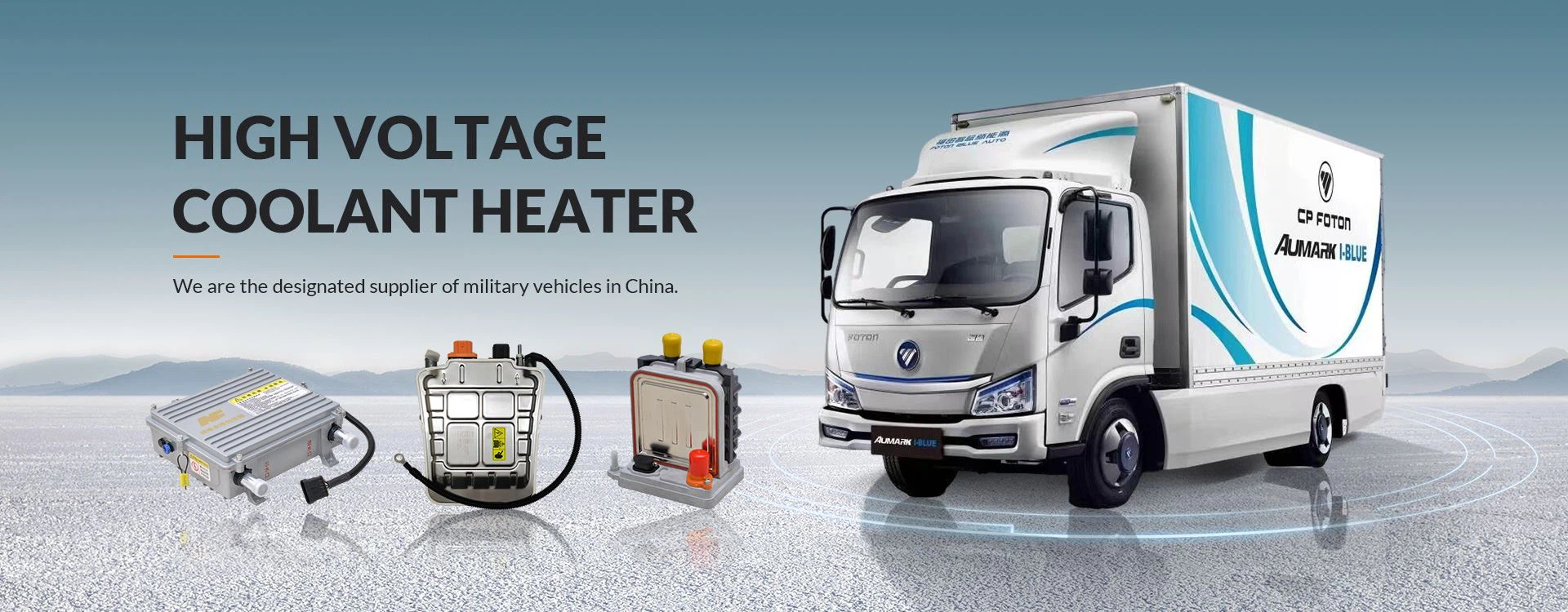
As the weather turns hot, do new energy vehicles still need PTC heaters?
As the weather turns hot, new energy vehicles still require PTC heaters-indeed, in certain scenarios, they become even more critical than in winter-yet their function undergoes a fundamental shift: from heating the cabin to safeguarding the battery's safety and longevity.
Simply put, in the summer, the PTC heater is not used to warm the vehicle's interior; instead, it is essential for cooling the battery or for dehumidifying the system during specific weather conditions.


There are three specific reasons:
1. **Battery Thermal Management is Key:** During fast charging or spirited driving in high-temperature conditions, the internal temperature of the battery pack may exceed 45°C. At such times, the cooling system (comprising the compressor and condenser) activates. However, if the coolant temperature drops too low-creating an excessive temperature differential between the battery cells' interior and exterior-or if the system needs to rapidly stabilize the battery within its optimal operating range of 25–35°C, the PTC heater will engage to provide auxiliary heating. This prevents localized overcooling and helps balance the overall efficiency of the heat pump system. Some vehicle models even employ a pre-cooling strategy for the battery to prevent irreversible degradation caused by excessive heat.
2. **Preventing A/C Performance Issues After Summer "Sun Exposure":** If a vehicle is equipped with a heat pump-based air conditioning system, it offers highly efficient cooling in hot weather. However, when ambient humidity is extremely high-such as after rain followed by intense sun exposure-the windshield may begin to fog up. In these instances, the PTC heater can supply dry, warm air to rapidly defog the windshield; this method is both faster and more energy-efficient than relying solely on the compressor for dehumidification.
3. **The Heat Pump's "Helper":** While a pure heat pump system is highly efficient at cooling during extreme summer heat, directly engaging the compressor to dissipate heat when the battery requires only moderate cooling (e.g., to reach 38°C) can result in overcooling. The PTC heater allows for precise, supplementary heating to fine-tune the temperature; this reduces the frequency of the compressor's start-stop cycles, thereby enhancing overall energy efficiency.
Conclusion: In hot weather, the PTC heater serves not to warm the vehicle's interior, but rather as a backup heat source for the battery thermal management system and as an emergency defogging device. Without it, the battery could suffer premature aging due to thermal stress under high-temperature conditions, or the defogging response time could be delayed. Therefore, it remains an indispensable component for new energy vehicles year-round, critical for both safety and performance.


