
Automotive Thermal Management Analysis -
PTC Water Heater Principle and Function Analysis
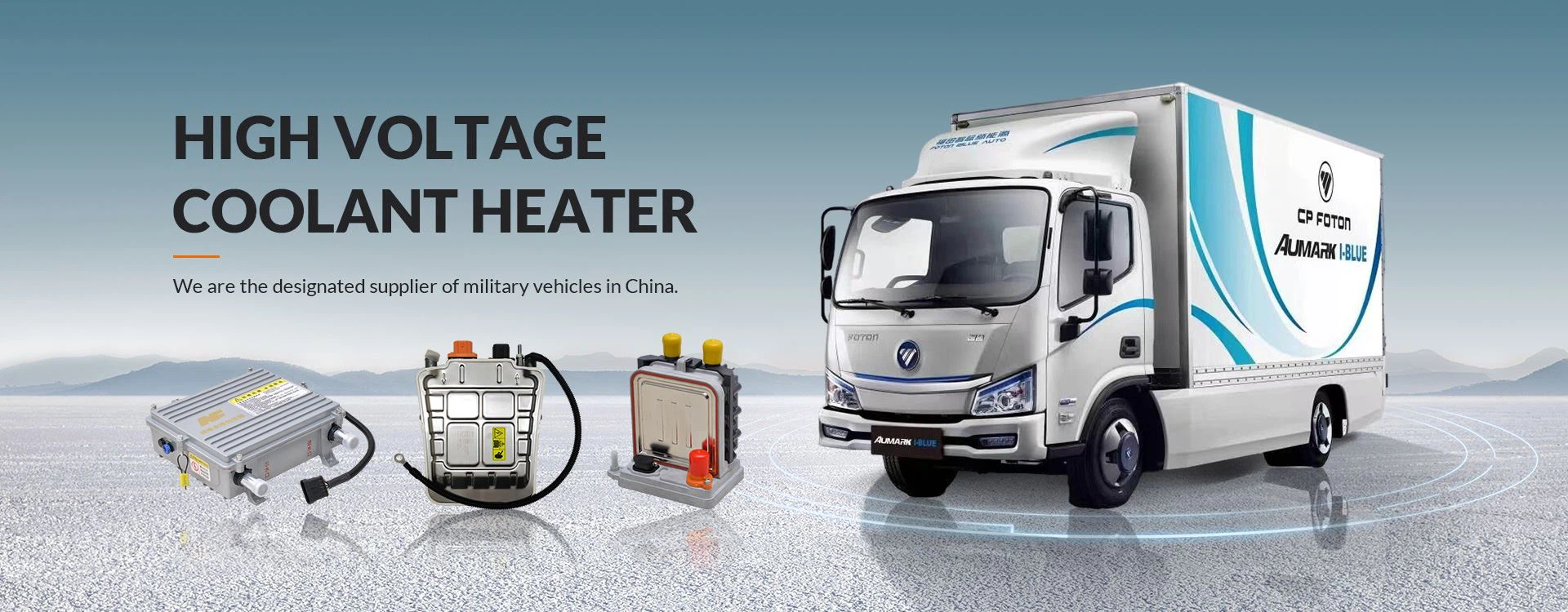
One advantage of the PTC water heater heating system is that it inherits the heating system of gasoline vehicles, eliminating the need to modify the existing HVAC assembly, thus significantly reducing the modification costs for automakers producing electric vehicles. The main components of the PTC water heater heating system include: PTC water heater, electric water pump, degassing chamber, water pipes, and heater radiator. The degassing chamber in the system has two functions:
(1) Reducing system pressure: During the heating process, the coolant produces water vapor, causing the system pressure to increase. When this pressure exceeds a certain threshold, the exhaust valve in the degassing chamber is opened, releasing the water vapor into the atmosphere, thereby reducing the system pressure.
(2) During the system's water circulation process, coolant may leak, which can be replenished using the coolant stored in the degassing chamber.

I. System Composition Analysis
The heating element of the PTC water heater is a PTC thermistor. PTC thermistors are made of a semiconductor material with a positive temperature coefficient. They can be divided into ceramic-based PTC thermistors and polymer-based PTC thermistors [20]. Ceramic-based PTC thermistors are semiconductor materials with a certain conductivity, with BaTiO3 or V3O3 as the main components and a small amount of donor elements added, which are mixed and sintered. Polymer-based PTC thermistors are polymer materials formed by combining organic polymers (such as polyethylene) as the matrix and incorporating conductive fillers such as carbon black, graphite or metal powder, and metal oxides. This system uses ceramic PTC, which has the advantages of constant temperature heating, no open flame, high thermal efficiency, and long life. The resistivity of PTC thermistors increases with the increase in temperature. When the temperature exceeds the Curie temperature, the resistivity suddenly increases, resulting in a decrease in heating power, thereby achieving the constant temperature function.

II. System Function Analysis
1) Soft Start Technology
At the beginning of the start-up, the heater works with low power, and then the duty cycle of PWM is gradually increased to slowly increase the power. The purpose is to effectively reduce the damage caused by inrush current to the circuit and battery, thereby reducing controller failures and extending battery life.
2) Wide Operating Voltage
The voltage of an electric vehicle battery is not constant; the output voltage decreases as the battery is depleted. The water heater designed in this paper aims to operate normally within a wide voltage range (DC400V-DC600V), and its heating effect is unaffected by voltage changes, ensuring stable heating during operation.
3) Linear Power Regulation
The switching of the PTC heating element in the heater is controlled by an IGBT (Inductively Coupled Device). The output of the IGBT drive circuit is connected to the load water heater, and the input is connected to a PWM signal. The power of the water heater is adjusted by changing the duty cycle of the PWM signal. The controller continuously adjusts the heater power to quickly and stably raise the interior temperature based on real-time feedback from temperature sensors of the water temperature and the vehicle's interior temperature. This linear power regulation is similar to that of a variable frequency air conditioner, making it more energy-efficient.
4) CAN Fault Diagnosis
When the heater malfunctions, such as a damaged heating element, a non-functional electric water pump, or a failure of the CAN communication module, the control system can display the fault information on the display panel to alert the user and disconnect the high voltage to the heater, stopping heating.
5) Heating Element Group Protection Control
When one heating element fails, that element is disconnected, while the other heating elements continue to operate normally, preventing the entire heater from stopping and improving efficiency.


