
Brief Analysis of Automotive Battery
Management System (BMS)
Basic introduction to BMS
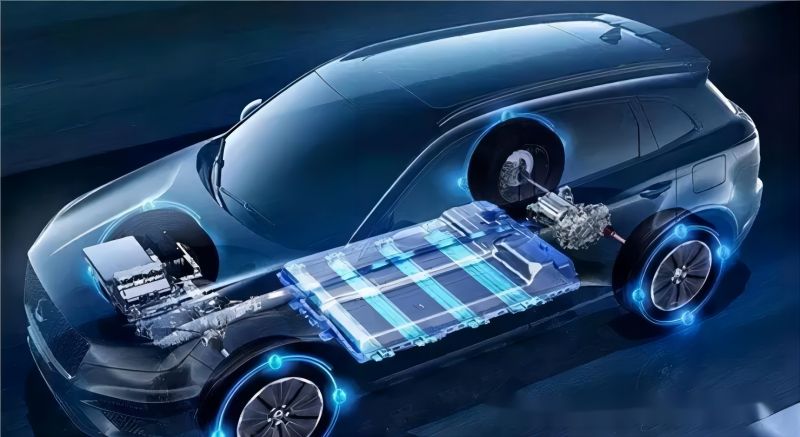
The electric vehicle battery management system, which we usually call BMS, is a vital electronic component. Its main task is to control and monitor the voltage, temperature and charge and discharge status of the battery pack, which are core parameters to ensure the safe operation of the battery. Through the precise control of BMS, we can ensure that the performance and safety of electric vehicles are guaranteed to the greatest extent.

Basic introduction to BMS
So, why do electric vehicles need a battery management system? This is because although the lithium-ion batteries used in electric vehicles have many advantages such as high power density, low self-discharge and low cost, they also have certain safety risks. Under abnormal circumstances, lithium batteries may fail due to overcharging, over-discharging, thermal runaway, aging and wear, and may even cause fires. Therefore, car manufacturers need to adopt effective battery management solutions, namely BMS, to ensure that electric vehicle batteries always operate in a safe mode.
2.Main types of BMS
There are two main types of BMS: centralized BMS and distributed BMS. Centralized BMS manages all batteries through a central control unit, which is relatively low-cost. However, once this control unit fails, the entire BMS system will fail. In contrast, distributed BMS uses multiple control units to work in parallel. This design enhances the reliability of the system, but also increases the complexity and cost of the system. Car manufacturers will choose the most suitable BMS system based on their needs and budget.
The battery management system is an integral part of electric vehicles. It ensures the safe operation of the battery and improves the performance and safety of electric vehicles. As the electric vehicle market continues to develop, we look forward to seeing more innovative and efficient battery management systems.
3.BMS main functions
First of all, BMS can obtain key parameters such as battery voltage, temperature and current in real time. Through these data, BMS can accurately monitor the battery's state of charge (SoC) and state of health (SoH). SoC helps users understand the remaining power of the battery, so as to plan driving and charging plans appropriately; while SoH helps manufacturers perform preventive maintenance to ensure that the battery is always in optimal condition.
Secondly, BMS has thermal management functions. Since battery performance and service life are very sensitive to temperature changes, BMS ensures that the battery always operates within the optimal temperature range by continuously monitoring and controlling the battery temperature. This helps improve battery performance and extend its lifespan.
In addition, BMS can also achieve charge and discharge balance of the battery pack. Through active balancing and passive balancing, BMS can ensure that each battery in the battery pack maintains consistent performance. This can not only improve the efficiency and life of the battery pack, but also avoid safety hazards caused by overcharging or undercharging of the battery.
Finally, BMS has a battery abnormal status protection function. It continuously monitors multiple parameters of the battery and automatically executes predefined protection procedures when abnormalities occur. For example, when the battery encounters abnormal conditions such as overvoltage, undervoltage, and overcurrent, the BMS will take corresponding measures, such as optimizing low-voltage charging or balancing voltage drops, to maintain the best performance of the battery.
To sum up, the electric vehicle battery management system plays a vital role in the safety, performance and lifespan of electric vehicles. As technology continues to advance, the functions and performance of BMS will continue to improve, providing strong support for the development of electric vehicles.
4. BMS development trends
Intelligent BMS, as the core of electric vehicle battery management, is using advanced algorithms and machine learning technology to optimize performance. It can adjust the battery's working status in real time based on battery usage patterns, environmental conditions and other dynamic scenarios to ensure optimal battery performance.
With the continuous development of wireless communication technology, more and more BMSs are beginning to incorporate OTA upgrade functions. This means that through the OTA update/upgrade system, BMS can receive the latest software updates from the manufacturer at any time, thereby keeping the system advanced and secure.
Additionally, EV battery management systems are being integrated with advanced predictive maintenance systems. These algorithms rely on real-time data to accurately predict the status of battery components and can provide early warning before battery problems occur, reducing customers' maintenance costs and improving vehicle reliability.
To sum up, intelligent BMS is providing strong guarantee for the safety, performance and lifespan of electric vehicles through continuous innovation and optimization. We look forward to the near future, with the further development of technology, BMS will bring an even better battery management experience.


