Development of New Energy Vehicle Thermal Management System

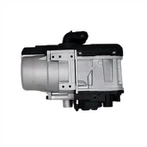
PTC Coolant Heater

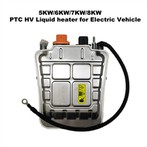
HVCH Heater for EV

PTC air heater
Battery Thermal Management
Battery thermal management is the core of the thermal management system of new energy vehicles. The high-efficiency operating temperature range of the battery is narrow, and the thermal management system is the key to maintaining battery performance and safety. The temperature range where the power battery can fully perform is usually 0°C~40°C 。If the temperature is too low, the charging and discharging power performance of the battery will decrease, and the vehicle will show insufficient power and battery life will be reduced; if the temperature is too high, there will be a risk of thermal runaway of the battery, threatening the safety of the vehicle.
The "barrel effect" of the battery requires uniform temperature control. The power battery is composed of a large number of battery cells connected in series and parallel. The overall voltage and capacity are easily affected by a "short board" cell. A single cell generates heat Loss of control not only leads to battery failure, but also leads to thermal runaway of the entire battery. In order to ensure the consistency of battery performance, the battery thermal management system usually needs to design a complex and sophisticated cooling circuit and arrange multiple temperature sensors to maintain the consistency of battery temperature.
At present, the commonly used battery cooling systems are mainly air-cooled and liquid-cooled. With the increase of battery capacity and power, efficient liquid cooling has become the main battery cooling method.
Liquid cooling uses coolant (or antifreeze, such as ethylene glycol, etc.) as the heat transfer medium, its heat transfer coefficient is higher than that of air, and the heat transfer effect is better. The commonly used liquid cooling solution for power batteries is: power battery coolant The circuit is coupled in parallel with the air-conditioning circuit, and the cooling liquid is cooled through a heat exchanger (Chiller). The low-temperature cooling liquid flows through the battery to dissipate heat for the battery. Inside the battery, cooling plates are usually arranged between the cells. The cooling liquid flows through the cooling plate The fine flow channel takes away the heat of the battery core.
The air-cooling system is relatively traditional and is widely used in China. According to the type of technology, it is mainly divided into passive air-cooling system and active air-cooling system. Passive air-cooling system refers to the natural inhalation of external ambient air or air in the cockpit when the car is driving Convection with the battery takes away heat. The active air cooling system usually uses the evaporator of the air conditioning system and the evaporator dedicated to the battery pack to process the external ambient air and then enters the battery pack to complete cooling or heating.
The air cooling system is characterized by simple structure and low cost, but the effect of thermal management is relatively general, and it is mainly used in early passenger cars and buses.