
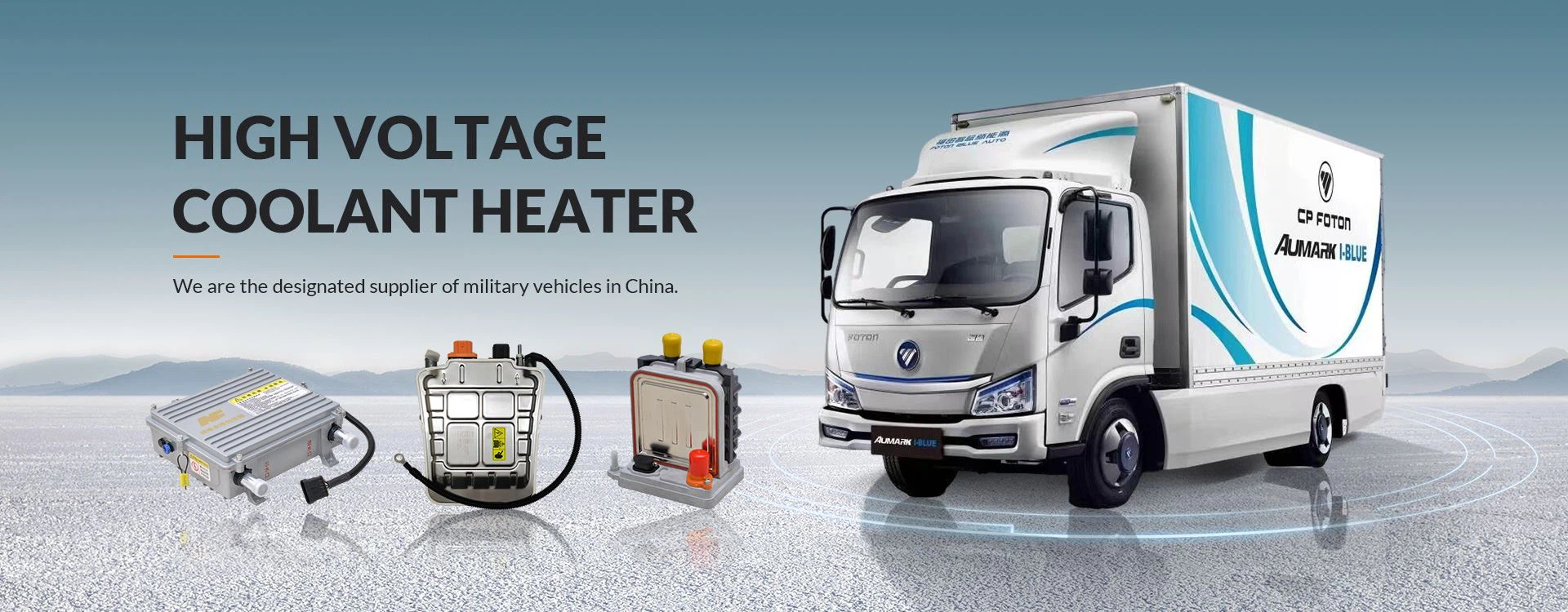
Introduction to Thick Film Heaters
Thick Film Heaters: The High-Efficiency "Electrothermal Engine" for New Energy Vehicles
Thick film heaters are devices that use screen printing technology to print a specially formulated resistive paste onto a ceramic or stainless steel substrate, which is then sintered at high temperatures to form a micron-level heating circuit. Their core principle is that electrical energy is directly and efficiently converted into heat energy through the thick film resistor, playing a crucial role in the thermal management of new energy vehicles.

Main Application Scenarios
Thick film heaters, with their high efficiency, speed, compactness, and high-voltage resistance, have penetrated into all key aspects of thermal management in new energy vehicles.
1. Battery Thermal Management (Core Application)
Application Forms:
Integrated Liquid Cooling Plate: The thick film heating circuit is directly printed and sintered onto the surface or interlayer of a liquid cooling plate. When energized, it directly heats the flowing coolant, which then circulates to heat the battery pack.
Embedded Heating Film: Flexible thick film heating sheets are directly attached to the surface of the battery cells or between modules for more direct radiative heating.
Value: Achieving rapid and uniform battery preheating in low-temperature environments is a core technology for ensuring winter range and fast charging capabilities.
2. Passenger Cabin Heating
Application Forms:
High-Pressure Water Heater: Replaces traditional PTC water heaters, serving as an independent heat source to heat the coolant and provide a high-temperature heat transfer medium for the air conditioning heating core. This is currently the most mainstream application in high-end vehicles.
Coupling with Heat Pump Systems: In extremely low-temperature environments, it serves as an effective supplement to the heat pump (as the efficiency of the heat pump decreases below -10℃), forming a highly efficient hybrid heating system.
Value: Provides powerful, rapid, and energy-efficient heating for the passenger cabin.

3. Localized Precision Heating
Application Forms:
Steering Wheel/Seat Heating: Utilizes ultra-thin, flexible thick-film circuitry to achieve a rapid and uniform heating experience.
Sensor/Camera Heating: Provides precise anti-fogging and de-icing heating for key sensors related to autonomous driving (such as cameras and radar), ensuring their normal operation around the clock.
Value: Improves comfort and the reliability of intelligent driving


