
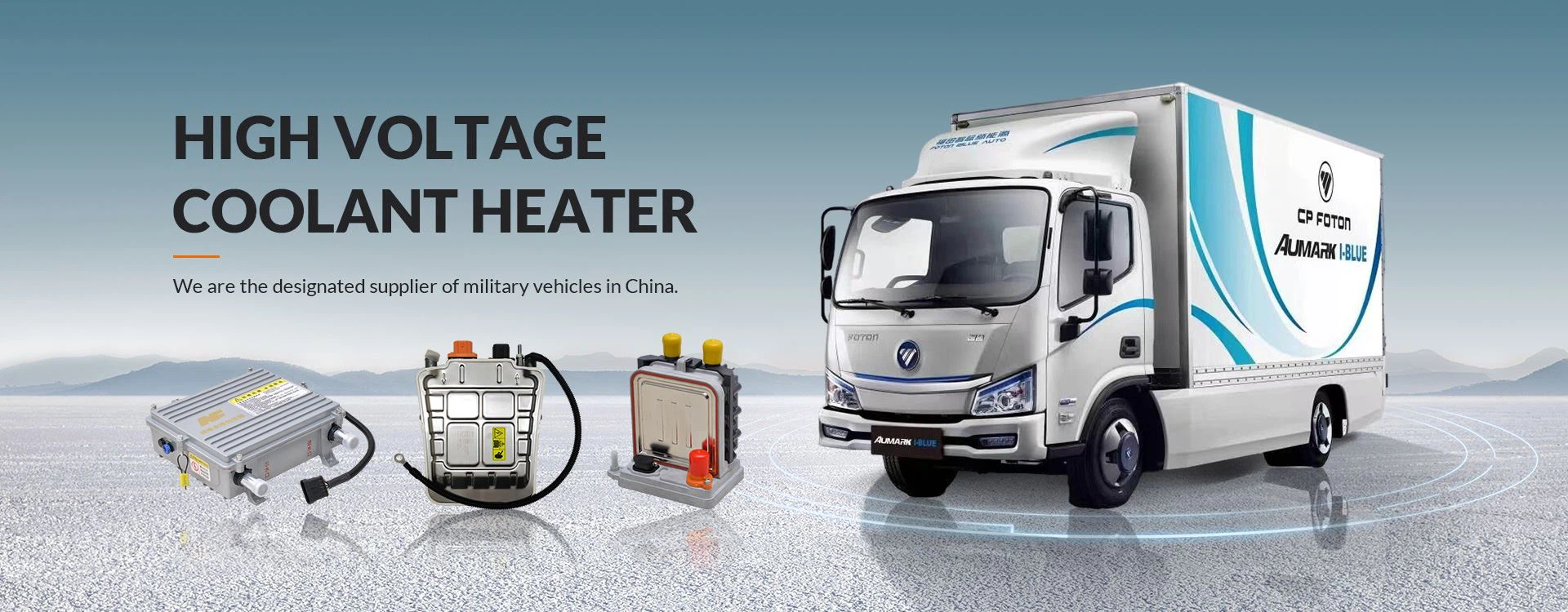
New energy vehicle battery thermal management
In recent years, with the development of industrial technology, the technological development of new energy vehicles has become more and more mature. Driven by the external environment and internal environment, the scale of the new energy vehicle market has gradually increased. Batteries are the most important part of new energy vehicles. The lifespan and usage efficiency of the parts and components determine the performance of the car. One of the important factors affecting the life of the battery is its operating temperature. In order to keep the battery within a suitable temperature range, the thermal management technology of the battery becomes very important. It is particularly important. This article analyzes the thermal management system technology of new energy vehicle batteries.
Vehicle thermal management components
The cooling system of new energy vehicles generally consists of three parts: battery cooling circulation system, motor electronically controlled cooling circulation system, and air conditioning warm air circulation system. PHEV models also have an additional engine cooling circulation system. The battery circulation system mainly heats the battery. Or cooling, the motor circulation system mainly cools the drive motor and CIDD (drive motor controller), and the air conditioning and heating system mainly heats or cools the passenger compartment. The main functional components involved are electronic water pump, three-way solenoid valve, two-way solenoid valve, PTC, heat exchanger, liquid-gas separator, radiator, expansion kettle, cooling pipeline and various fixed brackets, etc. Using the electronic water pump as the power source, the coolant as the medium, the solenoid valve controls the flow direction, so that the cooling medium flows along the pipe The path flows through the radiator and the cooled body, and the heat is dissipated and cooled through heat exchange, so that the working temperature of the functional parts is always maintained within an ideal working range and its performance is maximized. Whether it is a pure electric vehicle or a hybrid vehicle, the battery Thermal management loops are independent of other systems. The main reason is that the normal operating temperature range of the battery pack is quite different from other systems. The operating temperature of the battery pack is generally not allowed to exceed 35°C, while the drive motor often works at 55°C. The operating temperature range of the engine is around 95°C, so each circuit must operate independently.

Differences from traditional automotive thermal management
The thermal management of traditional automobiles is simple, without complex control and component systems. Its goal is only to ensure that the engine temperature always works within an ideal range, and to provide the required heat for the passenger compartment is to use the waste heat generated by the engine, which is completely No additional power is consumed. There is a big difference in the system structure between new energy vehicles and traditional vehicles. The requirements for the layout and installation of system components on the entire vehicle have also increased, which requires greater space in the cabin. Different types of New energy vehicles have different characteristics; for pure electric vehicles, there is no engine as a power source for coolant circulation, and there is no waste heat from the engine to utilize. For hybrid vehicles, because of its special control strategy, the engine When not working, it cannot provide power for the circulation of coolant, nor can it provide the required heat source for the passenger compartment in real time. Therefore, structurally, the thermal management systems of new energy vehicles are designed with independent electronic water pumps for coolant. The circulation provides power, and the warm air usually uses electric heating. After designing an independent electric heating PTC to heat the coolant, the coolant is recycled to the hot water tank in the car to provide heat for the passenger compartment. This is the current mainstream method; there is also a The first is to directly heat the air passing through the evaporator box and blow the heat into the car through a fan. This method is rarely used because it involves the safety of the car.


