
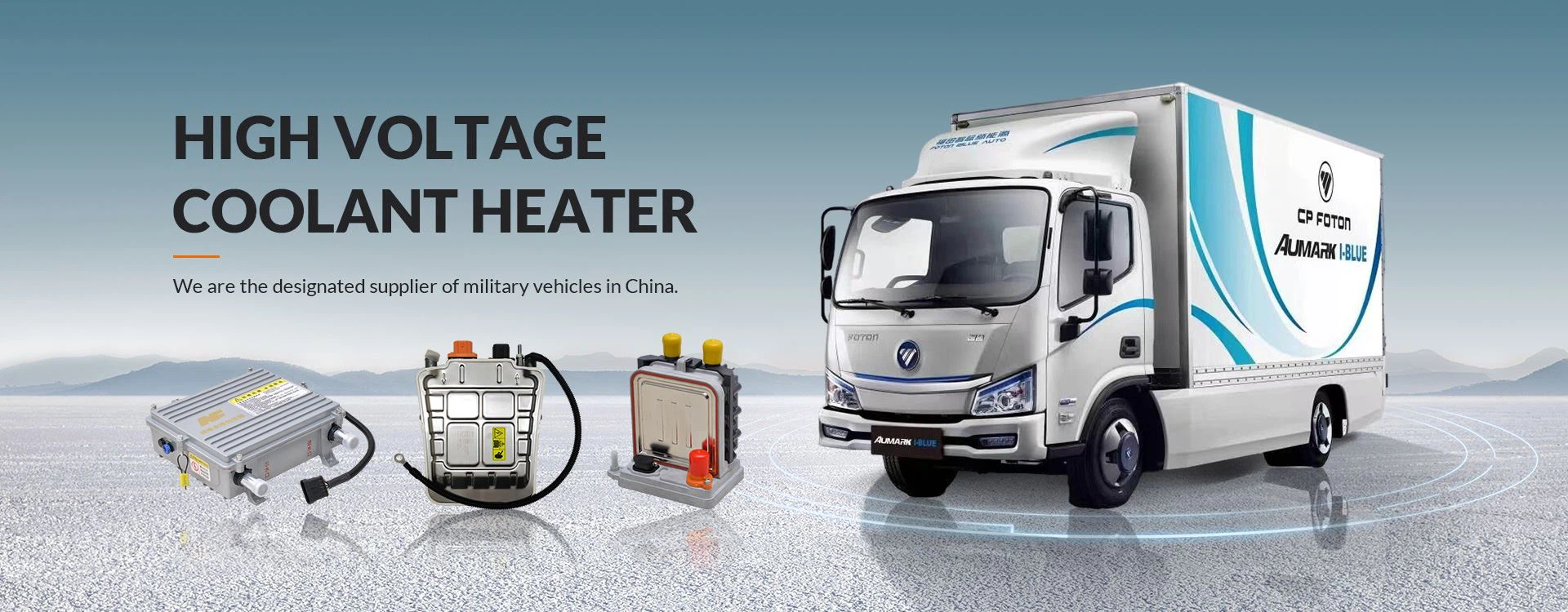
PTC technology and hot film technology for new energy
vehicle electric heaters
PTC technology
1. What is PTC technology?
PTC (Positive Temperature Coefficient) technology refers to positive temperature coefficient thermistor material technology. A distinctive feature of PTC material is that its resistance increases with temperature. This characteristic allows it to automatically reduce the current after the temperature rises to a certain level to prevent overheating, thereby achieving self-regulation and constant temperature control.
2. Working principle of PTC electric heater
Resistance heating: The PTC electric heater generates heat after being energized through the PTC ceramic element. As the temperature increases, the resistance increases and the current decreases, achieving a constant heating effect.
Automatic temperature adjustment: When the temperature rises to the preset limit, the resistance of the PTC element increases sharply and the current decreases to avoid overheating and keep the temperature stable.
3. Structural composition of PTC electric heater
PTC ceramic element: the core component, which determines the performance and temperature characteristics of the heater.
Heat sink: usually made of aluminum alloy to improve heat conduction efficiency.
Thermal conductive medium: such as thermally conductive silica gel, filled between the PTC component and the heat sink to improve thermal conductivity.
Insulation materials and shell: ensure the safety and structural stability of the electric heater.
4. Technical features and advantages
High safety: It has self-regulation and overheating protection functions, making it safe and reliable to use.
High efficiency and energy saving: high thermal energy conversion efficiency and high energy utilization rate.
Rapid heating: quick start and can reach the set temperature in a short time.
Good stability: precise temperature control, stable performance and long service life.
5. Application scenarios
In-car heating: Provides heating to passengers in low temperature environments.
Battery preheating: Preheat the power battery in a low-temperature environment to ensure battery performance and endurance.
Coolant heating: Rapidly heats the coolant to help the vehicle quickly enter working condition at low temperatures.
Hot film (Remo) technology
1. What is hot film technology?
Hot film technology is a heating technology based on thin film materials. The electric heating material is made into a thin film and is directly attached to the surface of the component that needs to be heated, using the resistive heating properties of the thin film for heating. Hot film technology has the advantages of uniform heating, fast response, and high energy efficiency.
2. Working principle of hot film heater
Thin film heating: The electric heating material is made into a thin film, which generates heat through electric current. The thin film is evenly distributed in the heating area, allowing the heat to be transferred evenly.
Direct heating: The film is directly attached to the surface of the component that needs to be heated, reducing energy loss during heat transfer and improving heating efficiency.
Temperature control: By accurately controlling current and voltage, precise temperature control of the film is achieved to ensure the heating effect.
3. Structural composition of hot film heater
Thermal film material: Usually made of conductive polymer or metal film, it has good thermal and electrical conductivity.
Adhesion layer: used to firmly adhere the thermal film to the surface of the heating component to ensure effective heat conduction.
Protective layer: Covers the surface of the thermal film to prevent the thermal film from mechanical damage or environmental impact.
Electrical connections: Includes electrodes and wires used to connect power and control systems.
4. Technical features and advantages
Uniform heating: The hot film material is evenly distributed to ensure consistent temperature in the heating area and avoid local overheating or undercooling.
Rapid response: The thermal film material is thin and has small heat capacity, so it can quickly respond to changes in current and achieve rapid heating.
High energy efficiency: Directly heat target components, reduce heat transfer loss, and improve energy utilization efficiency.
High flexibility: Thermal film can be made into various shapes and sizes to adapt to different heating needs and application scenarios.
5. Application scenarios
Battery heating: used for preheating and temperature maintenance of the battery pack to ensure battery performance and life in low-temperature environments.
In-car heating: installed on seats, steering wheels, etc., to provide comfortable heating for drivers and passengers.
Electronic equipment: used for temperature control of electronic components and equipment to prevent low temperature from affecting their performance.
Heating of other components: such as coolant heaters, air conditioning system heating elements, etc., to improve the overall performance of new energy vehicles in low-temperature environments.
Conclusion
The application of PTC technology and hot film technology in new energy vehicle electric heaters has their own advantages. PTC technology ensures the safety and efficiency of the heater with its self-regulation and overheating protection functions. Hot film technology provides a flexible and efficient heating solution with its characteristics of uniform heating, fast response and high energy efficiency. The two technologies complement each other in different application scenarios and jointly improve the performance and user experience of new energy vehicles in low-temperature environments.


