
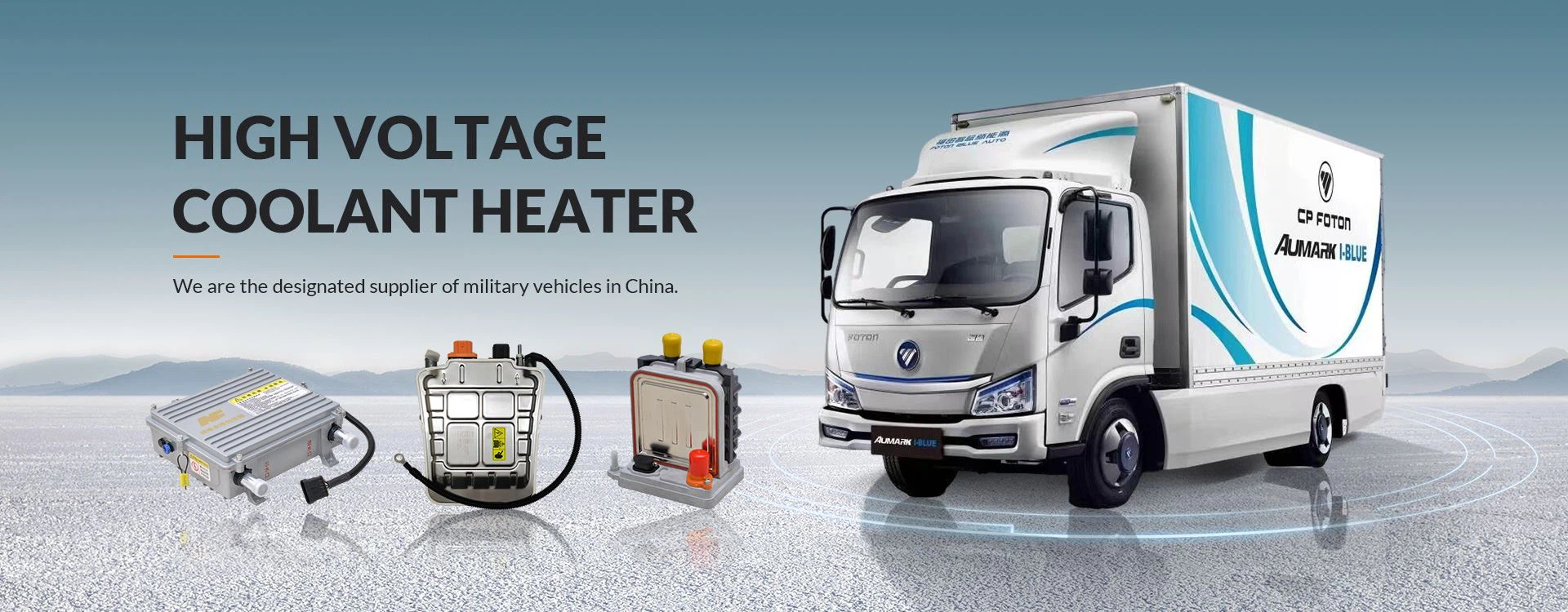
The difference between Hot Film PTC Heater and Thin Film PTC Heater
PTC (Positive Temperature Coefficient) heaters are widely used in different fields, including household appliances, medical devices, industrial equipment, and automobiles. Among different types of PTC heaters, there are two main categories: hot film PTC heaters and thin film PTC heaters. Both types of PTC heaters have advantages and disadvantages, depending on the specific application requirements.
Hot film PTC heaters are produced by depositing a PTC material on a substrate, which is typically a metal or ceramic plate. The PTC material has a high resistance at room temperature and a lower resistance at a certain elevated temperature, called the Curie temperature. When the heater is powered on, the current flows through the PTC material, generating heat due to Joule heating. As the temperature of the PTC material rises, the resistance also increases, leading to a self-limiting effect and a stable output power.
One major advantage of hot film PTC heaters is their high power density, which means that they can generate a large amount of heat in a small area. This property makes them suitable for applications that require fast heating, such as defrosting, dehumidification, and sterilization. However, a downside of hot film PTC heaters is their relatively high cost, as the deposition and patterning processes are complex and require expensive equipment.
In contrast, thin film PTC heaters are produced by depositing a PTC material on a substrate, which is typically a flexible polymer film. The PTC material has a low resistance at room temperature and a higher resistance at the Curie temperature. When the heater is powered on, the current flows through the PTC material, generating heat due to Joule heating. As the temperature of the PTC material rises, the resistance also decreases, leading to a self-limiting effect and a stable output power.
One major advantage of thin film PTC heaters is their flexibility, which means that they can be easily integrated into different shapes and sizes. This property makes them suitable for applications that require conformal heating, such as wearable devices, smart textiles, and biomedical sensors. However, a downside of thin film PTC heaters is their relatively low power density, which means that they may take a longer time to heat up and may not be suitable for high-power applications.
In summary, hot film PTC heaters and thin film PTC heaters have different properties and are suitable for different applications. Hot film PTC heaters have a high power density but a high cost, while thin film PTC heaters have a low power density but a high flexibility. Depending on the requirements of the specific application, a designer needs to choose the appropriate type of PTC heater to achieve the desired performance and cost effectiveness.


