
Thermal Management of New Energy Vehicles
Overview of cabin thermal management (MAC)
New energy vehicle air conditioning systems and how they work
The compressor in a new energy vehicle is driven by an engine, while the compressor in a new energy vehicle is driven by an electric motor, so the compressor in a new energy vehicle cannot be driven by an engine, but instead uses an electric compressor to compress the refrigerant. The basic principle of a new energy vehicle is the same as that of a traditional fuel car, using condensation to release heat and evaporation to absorb heat to cool the passenger compartment, except that the compressor has been changed to an electric compressor, and currently mainly uses a scroll structure compressor to compress the refrigerant.
The heating mode of a new energy vehicle is very different from that of a traditional fuel car, as the traditional heating mode of a fuel car is to transfer the residual heat from the engine to the cabin through the coolant to warm up the cabin, but as a new energy vehicle does not have an engine, there is no engine to heat the cabin, so other heating modes are used to heat the cabin. The following are some of the ways in which the air conditioning of a new energy vehicle can be heated.


(1) Semiconductor heating system: Semiconductor heaters are made of semiconductor components and terminals to carry out cooling and heating functions, the thermocouple in this system is the basic component for cooling and heating, and its structure is shown in Figure 2. Two semiconductor devices are connected to form a thermocouple, which, when energised with direct current, generates heat and temperature differences at the interface to heat the interior of the vehicle. The main advantage of semiconductor heating is that it heats the cabin quickly. The main disadvantage is that semiconductor heating consumes a lot of electricity, which is fatal for new energy vehicles that need to pursue range. Therefore, it cannot meet the requirements of new energy vehicles for energy-saving air conditioning. There is also a greater need for research into semiconductor heating methods and the design of an energy efficient semiconductor heating method.
(2) Positive TemperatureCoefficient (PTC) air heating: The main component of the PTC is the thermistor, which is heated by an electric heating wire, a device that directly converts electrical energy into thermal energy. The outside air is heated by the PTC heater and the heated air is sent into the interior of the car to make the car heated. As it consumes electricity directly, the energy consumption of the new energy vehicle is also relatively large when the warm air is turned on.
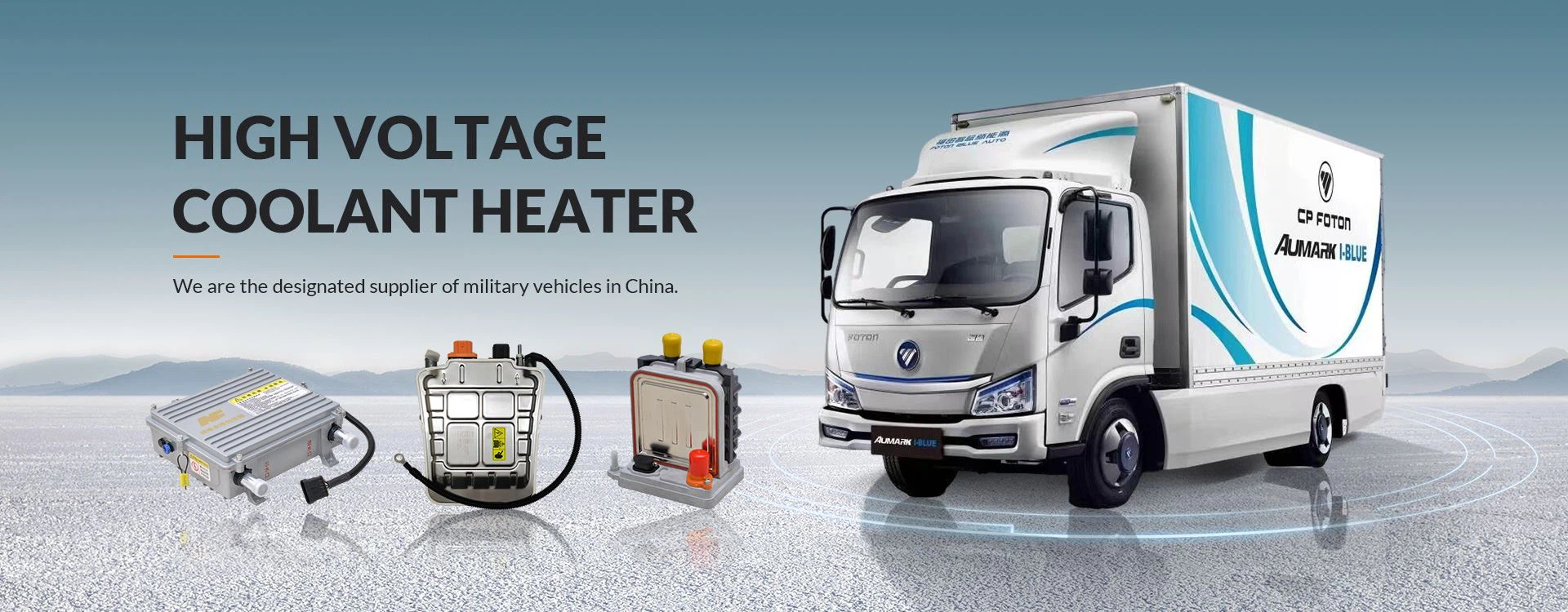
(3) PTC water heating: Like PTC air heating, PTC water heating generates heat through the consumption of electricity, but the water heating system first heats the coolant with PTC, heats the coolant to a certain temperature, pumps the coolant into the heater core and exchanges heat with the surrounding air, and the fan sends the heated air into the cabin to heat the cockpit. The cooling water is then heated by the PTC and the cycle is repeated. This heating system is more reliable and safer than the PTC air cooling.
(4) Heat pump air conditioning system: The heat pump air conditioning system is based on the same principle as the traditional car air conditioning system, but the heat pump air conditioning can achieve the conversion of cabin heating and cooling, its principle is shown in Figure 3 and Figure 4, through a four-way reversing valve to change the flow direction of the refrigerant in the system, so as to achieve the process of cooling and heating exchange. As heat pump air conditioning does not directly consume electrical energy to generate heat, it is more energy efficient than PTC heaters and is currently in mass production in some vehicles.


