

Do all thermal management systems require three-way valves?
Not all automotive and equipment thermal management systems require three-way valves; their configuration depends on the system architecture, temperature control requirements, and functional complexity.
Simple thermal management systems generally do not include three-way valves. These systems have a single loop and simple operating conditions, requiring only basic water circulation and heat dissipation. Basic temperature control is achieved through a water pump, radiator, and thermostat. They are commonly found in the basic cooling loops of traditional gasoline vehicles, small household appliances, and low-speed mobility scooters. The system's water flow direction is fixed, requiring no branching, merging, or loop switching, thus eliminating the need for a three-way valve for pipeline regulation.

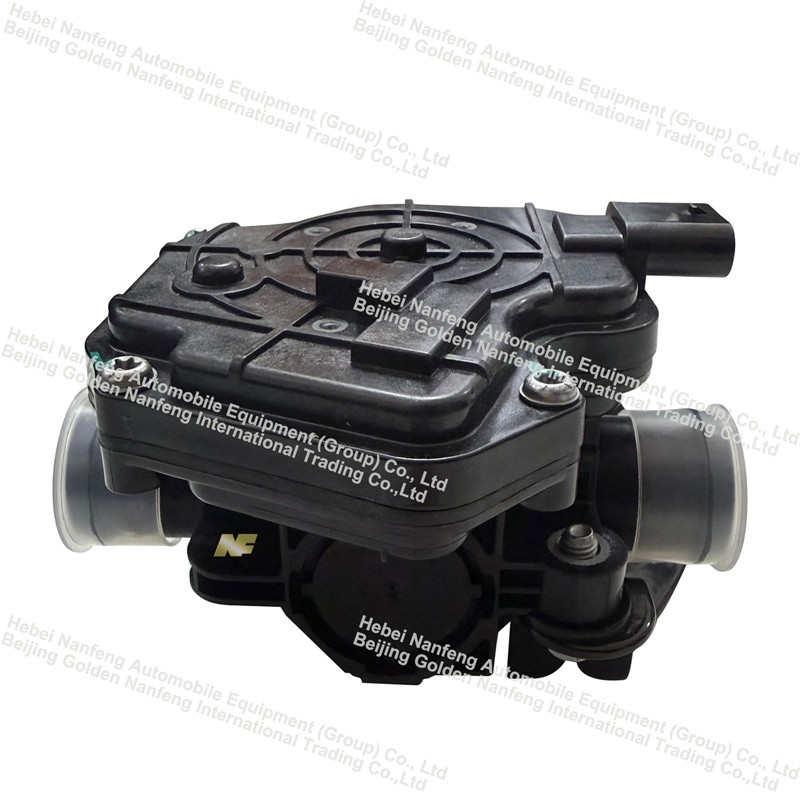
Complex integrated thermal management systems, especially in new energy vehicles, generally require three-way valves. These systems need to balance the temperature control of multiple components, including the motor, battery, electronic control system, air conditioning, and heater, with significant differences in the optimal operating temperatures of different components. Three-way valves can achieve water flow branching, loop switching, and hot/cold flow mixing, flexibly adjusting the coolant flow direction and flow rate. They can also perform single-loop/multi-loop switching, high-low temperature coupling, and waste heat utilization, ensuring that all components operate within their suitable temperature ranges.
Some mid-range systems use two-way valves or check valves instead of three-way valves, only achieving on/off control and abandoning the diversion function. In summary, the three-way valve is a core component of multi-loop, multi-temperature zone, and intelligent temperature control thermal management, but it is not a universal standard component. The more singular the system function, the lower the dependence on the three-way valve.