


How does a heat pump in an electric car work?
As we all know, a big problem affecting the popularity of new energy vehicles is the cruising range issue. Especially in winter, the cruising range of electric vehicles in northern areas is greatly reduced. Therefore, in this article we introduce a new energy vehicle's range-topping tool in winter—the heat pump system.
1. What is a heat pump system?
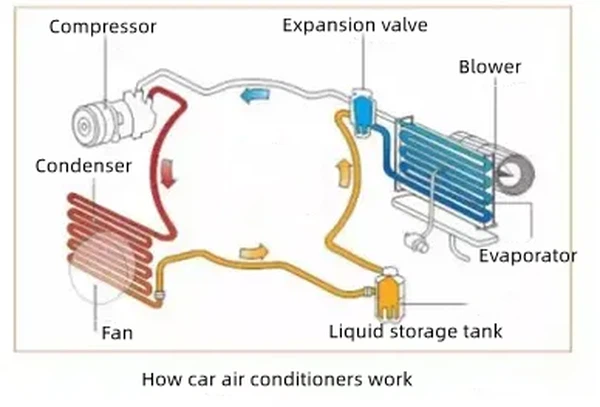
To understand the heat pump system, everyone should first understand the circuit of the car air conditioning system. As shown in the figure, the automobile air conditioning system mainly consists of four components: compressor, condenser, expansion valve, and evaporator. Although it is just four simple parts, the home air conditioner that everyone depends on for survival in summer is mainly composed of these four parts. The specific air conditioning principle will not be described here. You only need to know that the car air conditioning system has low temperature on the evaporator side and high temperature on the condenser side. The evaporator is hidden behind the air outlet of the passenger compartment of the car. When the air conditioner is turned on, the outside air passes through the evaporator and becomes low temperature, and when it blows into the car, it becomes cool wind.
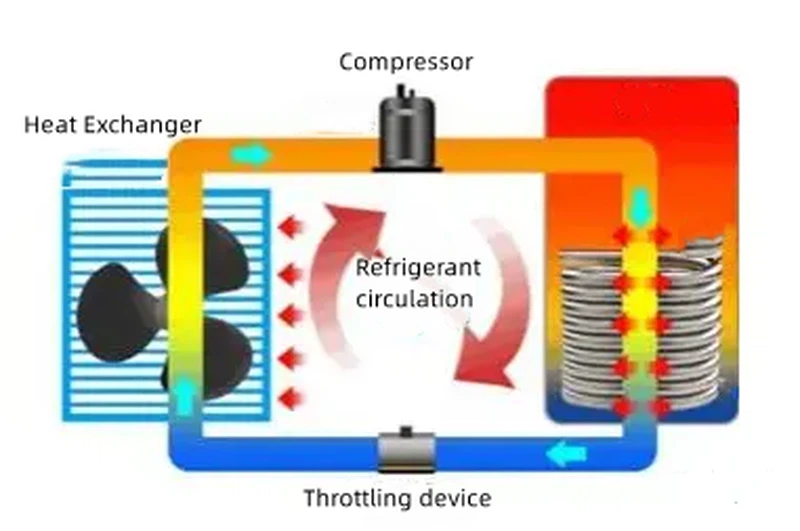
The car air conditioning system has been introduced to you above. Everyone knows that the condenser in the car air conditioning system is at high temperature and the evaporator is at low temperature. The heat pump system places the condenser inside the cabin to become an in-cabin condenser, and the evaporator is placed outside the cabin to become an out-of-cabin evaporator. In winter, after the heat pump system is started, the cabin condenser releases heat, and the cold outside air passes through the hot cabin condenser and turns into warm hot air, as shown in the figure below.
Of course, ordinary cars will not simply swap the positions of the condenser and evaporator, because we need a heat pump in winter and air conditioning in summer, so the real heat pump air conditioning circuit will be much more complicated. The latest heat pump management technology not only recovers waste heat emitted by drive motors, on-board chargers and inverters, but also recovers even more waste heat from battery packs and slow chargers. The captured energy therefore increases the efficiency of heating, ventilation and air conditioning systems, minimizing battery drain.
2. The significance of heat pump systems to new energy vehicles
Everyone knows that the biggest weakness of current electric vehicles is that charging is much slower than refueling. Especially in the cold winter, when the hot air is turned on, the cruising range is stuck. Why does the cruising range of electric cars with hot air in winter decrease rapidly? The hot air of general fuel vehicles uses the waste heat of the engine, so it can be said to be waste reuse. However, electric vehicles do not have an engine, so heating in winter becomes a big problem.
Therefore, in order to reduce users’ battery life anxiety. Every car company is looking for ways to extend the cruising range of electric vehicles. Under this situation, the heat pump system of home air conditioning has once again entered the field of vision of car people.
3. What stage of development is the heat pump system currently at?
In order to maximize the battery life of vehicles, mainstream car companies are currently studying the use of engine waste heat from electric vehicles to provide energy for heat pump systems. Its latest system removes heat from a variety of components, including the drive motor, inverter, on-board charger and the battery pack itself. Heat turns liquid refrigerant into a gas.
Therefore, in the new energy era, the heat pump system is the most important factor in the cruising range of electric vehicles. When choosing an electric vehicle, car enthusiasts must remember to check whether the car has a heat pump system and the efficiency of the heat pump system. Because this is related to the most important issue of cruising range of electric vehicles.


