

Vehicle Thermal Management of New Energy Vehicles: Cooling, Heating and Integrated Coordination
During vehicle operation, the battery, electric motor, power electronics, and charging modules generate heat. Meanwhile, the passenger cabin requires heat removal in summer and heating in winter. The core of system design lies not in simply adding more components, but in addressing three fundamental questions: where does the heat originate, where should it be directed, and which circuit offers the greatest energy efficiency and safety under the current operating conditions?
In terms of architecture, the thermal management system of a new energy vehicle typically comprises a refrigerant circuit, a coolant circuit, a cabin air circuit, and a controller. The refrigerant facilitates heat transfer through phase changes-achieved via compression, condensation, expansion (throttling), and evaporation. The coolant serves to transport heat from the battery and electric drive components to a radiator or a refrigerant-based heat exchanger. The controller, based on inputs such as temperature, pressure, flow rate, and power demand, determines the operation of valves, pumps, fans, and the compressor.
Cooling-only with PTC: Simple structure, but high power consumption
An early, common solution for electric vehicles involved using an electric compressor for cooling, paired with a PTC coolant (Positive Temperature Coefficient) heater for cabin heating during winter. In cooling mode, the compressor pressurizes a low-temperature, low-pressure refrigerant into a high-temperature, high-pressure gas; the condenser releases heat into the ambient environment, and after passing through an expansion valve, the refrigerant enters the evaporator to absorb heat from the cabin. In heating mode, the PTC converts electrical energy directly into thermal energy-offering quick response and straightforward control-though this energy path is relatively inefficient.
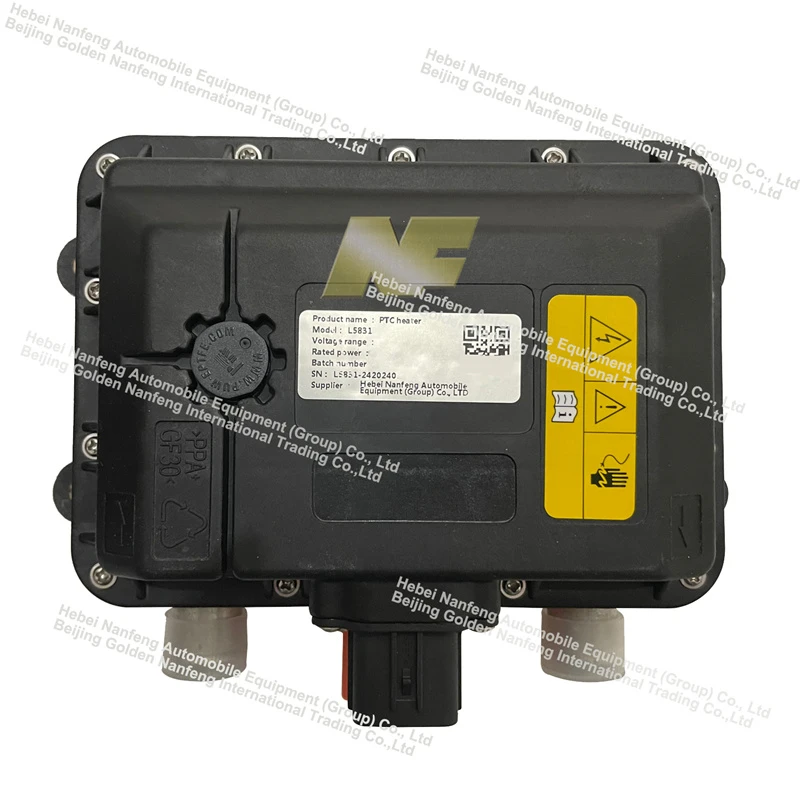
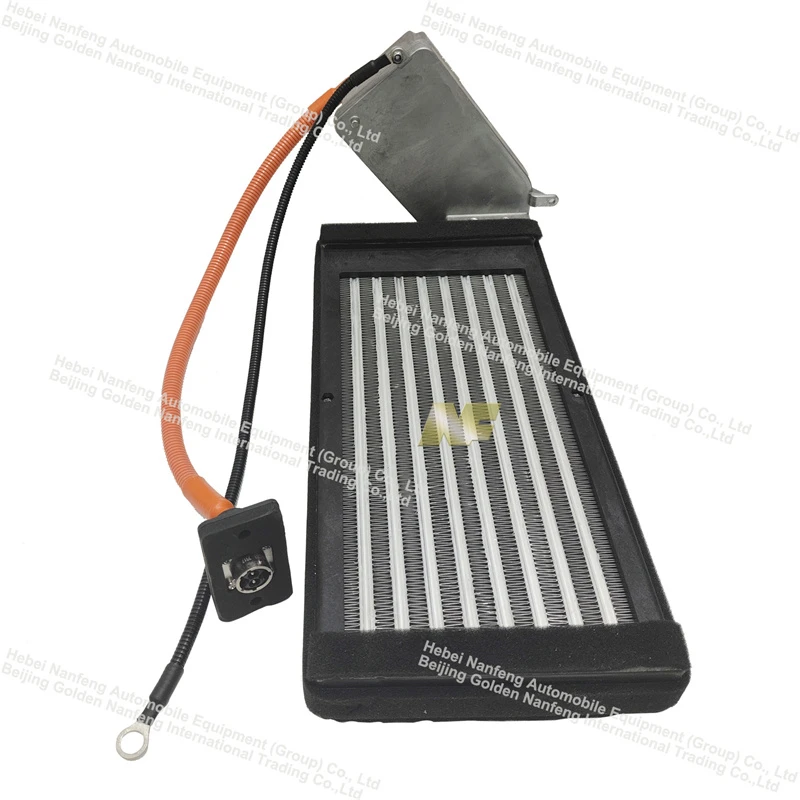
PTC air heaters can be positioned on the air side, or they can heat the coolant, which then transfers heat to the cabin via a heater core. The fundamental difference between these two approaches lies not in their heating capacity. Still, in the path by which heat enters the cabin, the air-side configuration provides a faster response. In contrast, the liquid-side (coolant-based) configuration allows for better integrated thermal management, including the utilization of waste heat from the battery and electric drive system. In scenarios involving low ambient temperatures, high thermal loads, or low battery charge, the controller typically imposes an upper limit on the PTC's power output to protect the vehicle's range and ensure the safety of the high-voltage system.
The Value of Heat Pump Systems: Transferring Ambient Heat into the Vehicle Cabin
Heat pump heating does not "generate" heat; rather, it uses a refrigerant to absorb ambient heat via an outdoor heat exchanger, raises the temperature through a compressor, and subsequently releases that heat via an indoor heat exchanger. As long as there is usable low-grade heat available in the external environment, a heat pump can potentially consume less electrical energy than a pure electric (resistive) heating system.
The primary challenge for heat pumps lies in mode switching. The indoor heat exchanger functions as an evaporator during cooling, but shifts to act as a condenser during heating. Components such as the four-way reversing valve, three-way valves, expansion valves, and fans must operate in a precise sequence. If pressure is not equalized during the switching process, it can lead to excessive load shocks on the compressor, the backflow of liquid refrigerant, or transient fluctuations in cabin temperature. Consequently, the system must incorporate specific procedures-such as presetting valve positions, reducing compressor speed, allowing time for pressure equalization, and subsequently ramping the compressor load back up.