Analysis of electric vehicle heating solutions
High voltage air heating
Implementation plan
Figure 7 shows the system structure of high-voltage air heating system. Remove the original vehicle inlet and outlet pipes and heater core, replace the heater core with an air heater PTC of the same size and installation method as the original vehicle heater core, then change the relevant control circuits, and insulate the PTC core measure.
Advantages
1) No changes to the HVAC structure are required.
2) Unlike low-voltage air heating heaters, which are limited by many factors such as power output capacity, high-voltage air heating heaters can provide very strong power output and high-efficiency heating.
3) Heating the air directly, the driving room temperature rises quickly.
Disadvantages
1) In order for the air conditioning and heating system to meet the defrosting and defogging regulations and heating requirements, the heating power of the PTC needs to be at least 3000 W or greater. This power is a very huge consumer compared to the total battery capacity, which seriously affects the driving range of pure electric vehicles.
2) PTCs with a heating power of more than 3 000 W are arranged in HVAC, which may cause safety hazards. The working voltage range of high-voltage air heating PTC is generally 250~450 V (DC), and high-voltage insulation measures need to be taken. EN60335 requires that the insulation level of high-voltage products should be greater than or equal to 2 000 V. When designing products, it is necessary to consider the safety measures of multi-layer insulation (Figure 8), which greatly increases the cost of the product itself and makes product application difficult.
3) The high-voltage air heating heater is arranged in the HVAC. Insulation measures are required for the high-voltage air heating heater. Otherwise, when the temperature of the high-voltage air heating heater is high, the HVAC shell will produce odor and affect the air quality in the cab.
High voltage water heating
Implementation plan
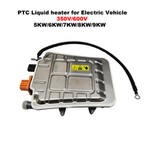
A high-voltage water heating heater, water tank, water pump, and water pipes are added to the engine room to form a closed water circulation system with the original car heater core.
Advantages
The system is highly efficient. According to the current electric compressor technology, the COP of the heat pump system is 2.5 at 0°C and 2.0 at -5°C. Therefore, under the premise of generating the same heat, using heat pump heating is better than using electric heating. The heating method consumes less electricity and can increase the vehicle's driving range.
Difficulties
1) The technology of key components is immature: core components such as electric compressors, internal condensers, evaporative condensers, and solenoid valves for refrigeration pipelines are still under research and development. For evaporative condensers, reducing internal pressure is a key factor to improve the maximum heat transfer capacity of the product; reasonable fin size can reduce the risk of frost in the evaporative condenser.
2) Immature control technology: Heat pump air conditioning control technology, especially the variable speed control algorithm of the vehicle electric scroll compressor and the control algorithm of the solenoid valve (conversion between air conditioning mode and heat pump mode) are immature.
3) The heat pump system has a complex structure, a large number of parts, and difficult cabin layout.
4) The cost increases a lot and the development cycle is long.
5) As the ambient temperature decreases, the COP value of the heat pump system will decrease. When the ambient temperature is lower than -10°C, the electric compressor speed needs to reach more than 8 000 r/min to maintain thermal balance. When the electric compressor speed reaches more than 8 000 r/min, the noise is very loud and it is difficult to meet the requirements of relevant standards. Therefore, the heat pump heating method is greatly limited by the temperature range.