
How does a 3-way coolant valve route coolant in a BTMS loop?
The electronic 3-way coolant valve is a core switching and distribution component in the Battery Thermal Management System (BTMS). It receives instructions from the thermal ECU to redirect coolant flow among three ports, switching between cooling, heating, and bypass circulation modes to keep lithium battery packs within the optimal working temperature window of 25–40°C.
A typical proportional 3-way valve has one inlet and two outlets, connecting the battery cooling plate circuit, radiator, and PTC heater/chiller loop respectively. A small servo motor drives its internal rotor to continuously adjust the flow area, not only fully switching channels but also enabling proportional flow mixing.
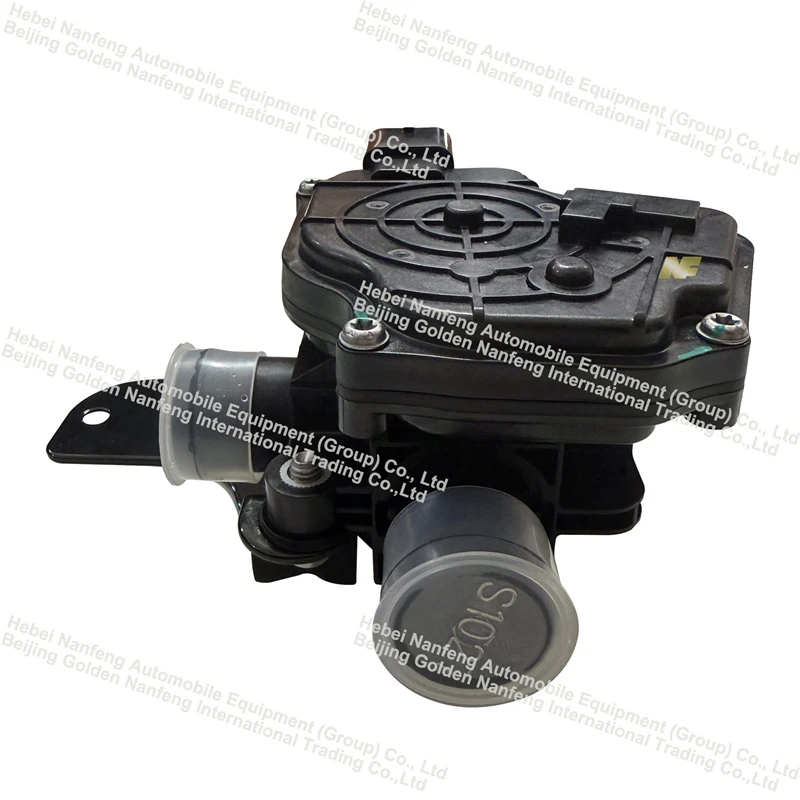
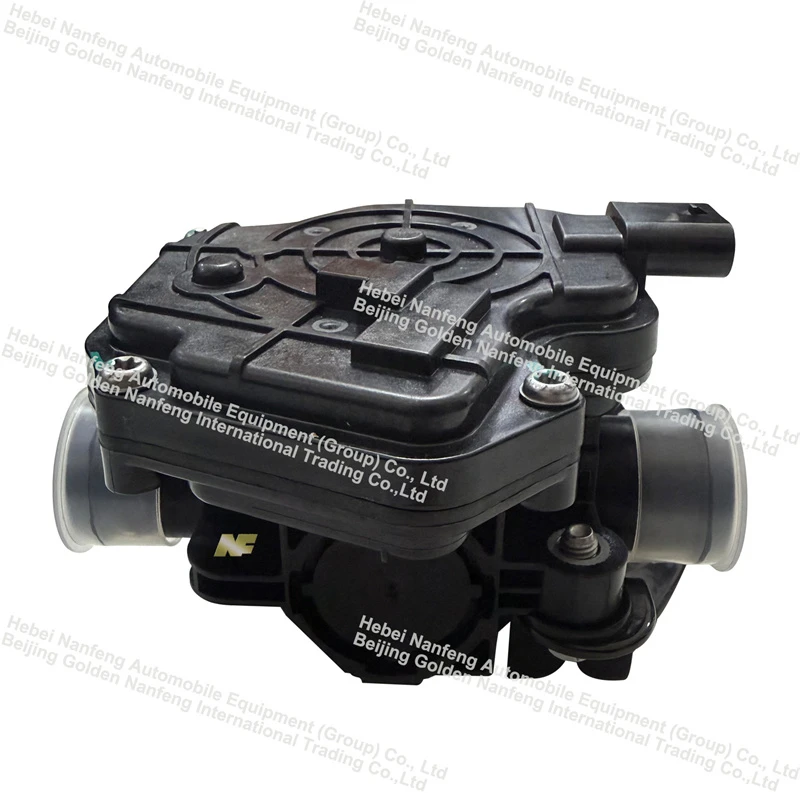
In high-temperature cooling mode, the valve connects the battery circuit to the radiator or chiller loop. Heated coolant absorbing heat from battery cells flows into the valve and is routed to the heat exchanger. After heat dissipation, cooled coolant returns to the battery plate to suppress temperature rise and avoid thermal runaway risk.
In low-temperature heating mode, the valve switches to the bypass position and isolates the radiator branch. Coolant circulates only inside the closed loop through the PTC heater. Heat is carried to the battery pack for rapid warm-up, preventing heat loss to the radiator and shortening preheating time.
At moderate ambient temperature, the valve performs mixed flow control. Part of the coolant goes through the radiator for mild heat dissipation, while the rest bypasses it. This balances temperature uniformity among battery cells and reduces frequent start-stop of the chiller and PTC, cutting power consumption.
Precise routing by the 3-way valve ensures consistent temperature difference across modules. It simplifies the hydraulic layout of BTMS, reduces extra solenoid valves, and improves system reliability. Stable coolant distribution is critical for battery capacity, cycle life, and overall safety of electric vehicles and energy storage equipment.


