
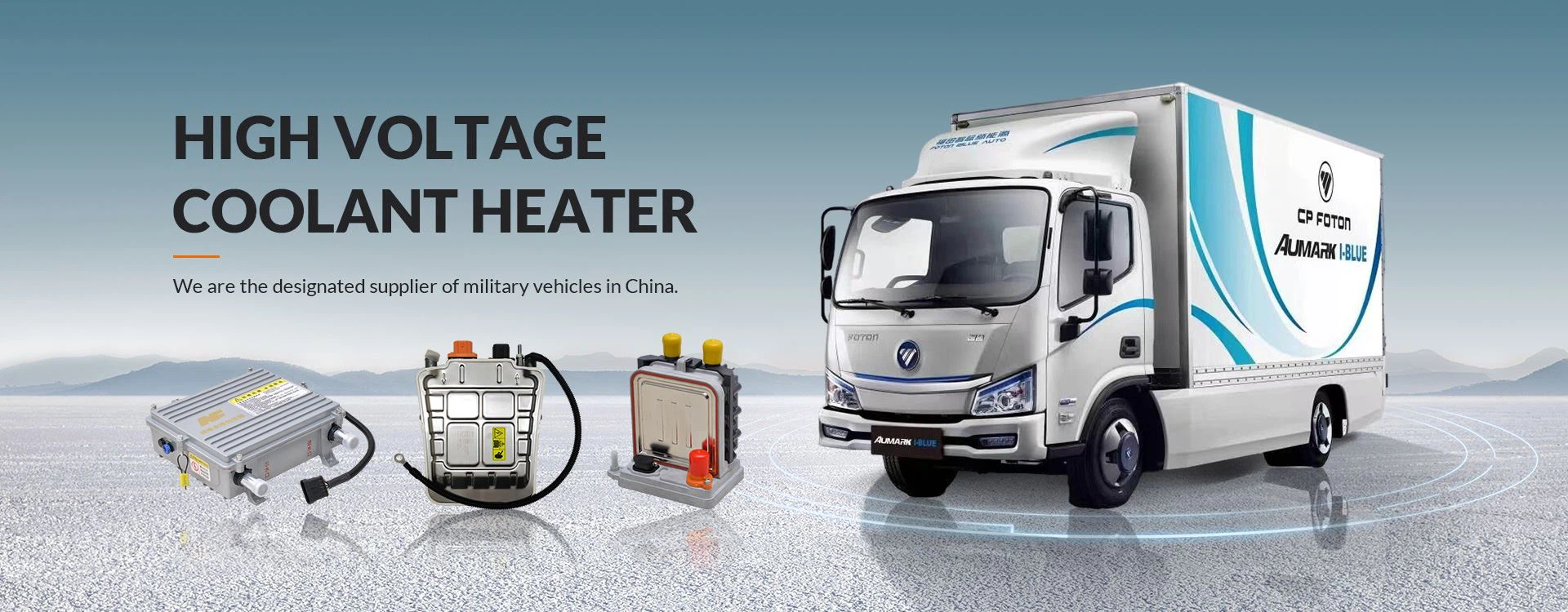
New Energy Vehicle Thermal Management
ⅠNew energy vehicle thermal management
Vehicle thermal management components
The cooling system of new energy vehicles generally consists of three parts: battery cooling circulation system, motor electronically controlled cooling circulation system, and air conditioning warm air circulation system. PHEV models also have an additional engine cooling circulation system. The battery circulation system mainly heats the battery. Or cooling, the motor circulation system mainly cools the drive motor and CIDD (drive motor controller), and the air conditioning and heating system mainly heats or cools the passenger compartment. The main functional components involved are electronic water pump, three-way solenoid valve, two-way solenoid valve, PTC, heat exchanger, liquid-gas separator, radiator, expansion kettle, cooling pipeline and various fixed brackets, etc.[5]. The electronic water pump is used as the power source, the coolant is the medium, and the solenoid valve controls the flow direction to make the cooling medium It flows through the radiator and the cooled body along the pipeline, dissipating and cooling through heat exchange, so that the working temperature of the functional parts is always maintained within an ideal working range, maximizing its performance. Whether it is a pure electric vehicle or a hybrid The battery thermal management cycle is independent of other systems depending on the vehicle model. The main reason is that the normal operating temperature range of the battery pack is quite different from that of other systems. The operating temperature of the battery pack is generally not allowed to exceed 35°C, while the drive motor often works At around 55°C, the engine operating temperature range is around 95°C, so each circuit must operate independently.
Differences from traditional automotive thermal management
Thermal management of traditional automobiles is simple, without complex control and component systems. Its goal is only to ensure that the engine temperature always works within an ideal range, and for the passenger
The required heat is provided by the cabin by using the waste heat generated by the engine operation, without consuming additional power [1]. There is a big difference in the system structure between new energy vehicles and traditional vehicles. The system components are arranged on the entire vehicle. Installation requirements have also increased, requiring greater space in the cabin. Different types of new energy vehicles have different characteristics; for pure electric vehicles, there is no engine as the power source for coolant circulation, and there is no waste heat from the engine. It can be used. For hybrid vehicles, due to its special control strategy, the engine cannot provide power for the circulation of coolant when it is not working, nor can it provide the required heat source for the passenger compartment in real time. Therefore, in the structure On the market, the thermal management systems of new energy vehicles are designed with an independent electronic water pump to provide power for the circulation of coolant. The warm air usually uses electric heating. An independent electric heating PTC is designed to heat the coolant, and then the coolant is recycled to The hot water tank in the car provides heat to the passenger compartment, which is currently the mainstream method; there is also a method that directly heats the air passing through the evaporator box and blows the heat into the car through a fan. This method is currently extremely popular because it involves safety in the car. Use sparingly.
ⅡTypes of battery thermal management systems
Different battery thermal management methods involve different parts numbers, structures, and layouts. Different types of thermal management systems are selected based on vehicle development costs, vehicle weight, and layout space requirements. Its main technologies are There are five types of routes:
Direct cooling type
Referred to as battery direct cooling technology, the direct cooling system has a built-in refrigeration evaporator inside the battery, which is connected to the air conditioning system through pipelines. When the battery needs to be cooled, a compressor is used to send the compressed refrigerant into the evaporator inside the battery, and then takes the battery away. The internal heat achieves the cooling effect. The system has the advantages of compact structure, good cooling effect, small number of parts (only one inlet and one outlet refrigeration pipeline is required), and light weight. However, the disadvantage of this system is that it cannot provide energy under sub-zero low temperature conditions. There is no protection for the condensed water generated during battery heating and refrigeration, and the temperature uniformity of the refrigerant is difficult to control. The refrigeration system has a short life and low reliability. Failures such as refrigerant leakage and insufficient refrigeration capacity often occur. This is the latest at present. Battery cooling technology is relatively low in maturity and has been applied in mass-produced models on the market such as BYD and Tesla. It is a major technology route in the future, as shown in Figure 1.


Radiator water cooling type
The radiator cooling circuit is an independent circuit, consisting of a radiator, an electronic water pump, a heater, etc., with antifreeze as the medium. The antifreeze comes out of the radiator, passes through the heater, then to the battery, and finally returns to the radiator. This cycle method is used to cool and heat the battery. The system has a simple structure, low cost, and has the advantages of energy saving in low-temperature environments all year round. However, the heat dissipation efficiency of the system is low, and the water temperature is high in high-temperature climates in summer, so it cannot meet the requirements of high-temperature environments. For usage conditions, see Figure 2.
Direct cooling water cooling type
This system integrates direct cooling and water cooling, and bridges the air conditioning system and the water cooling system through the battery cooler Chiller (also called a heat exchanger). This system avoids the shortcomings of the first two cooling methods and is currently the most advanced cooling system. One of the commonly used battery thermal management systems. There are more system components than the first two, the system is more complex, and the required parts layout space is relatively large. The compressor load is heavy during operation, which consumes a lot of energy for the entire vehicle and is not economical. In addition, , when part of the air conditioning system fails, the cooling demand of the battery cannot be met to the maximum extent, see Figure 3.


Water-cooled hybrid type
This system is based on the direct cooling water cooling system, and adds a radiator water cooling system. The two are arranged in parallel circuits. By controlling the solenoid valve, different circuits are used to cool the battery under different conditions. In low temperature environments , only the radiator water cooling system needs to work. When in a high temperature environment, switch to the direct cooling water cooling system. Under harsh working conditions, the two systems can work at the same time, and the battery can also obtain maximum cooling capacity, which can basically cover all use environments. 。This cooling system is extremely complex, has high cost, requires high vehicle layout space, and the system control strategy is complex. Stability and reliability are a challenge. This system is also used in most hybrid PHEV models on the market and has matured Technology, see Figure 4.
Air cooling type
This system directly leads the cold air from the passenger compartment cooling to the battery through the pipe, and uses the cold air to air-cool the battery. The advantages of this system are simple structure, controllable cold air temperature, and low system cost. However, it also has the disadvantages of the direct cooling system. , the system has no heating function, and the condensed water generated on the battery surface is not easy to dry, and there is a risk of corrosion and contamination inside the battery. This type of thermal management method is generally not recommended, see Figure 5


