What are the Technical Approaches (cooling/heating solutions) for BTMS?

1. Air Cooling (Forced-air cooling)
Principle: Fans drive cabin air or ambient air across the cell surfaces for heat exchange.
Advantages: Simple structure, low cost, no risk of fluid leakage, easy maintenance.
Disadvantages: Low heat transfer coefficient, poor temperature uniformity; weak performance during high-power fast charging or sustained high loads; high noise levels.
Applications: Early low-end hybrids and some A00-class micro-cars; largely phased out in modern pure electric passenger vehicles, though still used in energy storage systems.
2. Liquid Cooling (Mainstream for current passenger vehicles)
Uses an aqueous ethylene glycol solution (antifreeze: water + ethylene glycol) as the heat transfer medium, exchanging heat with cells via piping and liquid-cooled plates (cold plates).
Two structural types:
1) Bottom cold plate: A large-area liquid-cooled plate covers the bottom of the battery pack; cells are attached to the plate via thermally conductive pads (commonly used with LFP blade batteries).
2) Serpentine/Interlayer cold plate: Cold plates are embedded between cells (used with prismatic ternary cells or cylindrical CTC/CTP configurations).
Advantages: High heat transfer efficiency, good temperature uniformity, supports high-power fast charging; easy to integrate with the vehicle's heat pump system.
Disadvantages: Includes piping connections (risk of leakage); higher component count and cost.
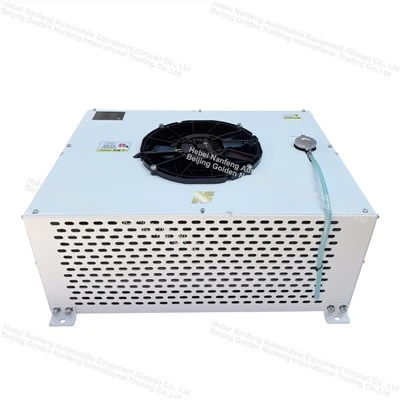
3. Direct Cooling/Heating (Direct refrigerant cooling; refrigerant flows directly into the battery cold plate, bypassing the antifreeze loop)
Air conditioning refrigerant (e.g., R744, R134a) flows inside the cold plate, eliminating the intermediate antifreeze circuit.
Advantages: Faster heat transfer, reduced heat exchange losses, high energy efficiency; commonly used with heat pump systems in high-end models.
Disadvantages: High system pressure, extremely strict sealing requirements, complex control logic.
4. Heat Pipes / Phase Change Materials (PCM) (Auxiliary solutions; rarely used as the primary cooling method)
PCM: Materials such as paraffin wax; absorb heat when melting and release heat when solidifying, buffering temperature fluctuations. Suitable for low C-rate scenarios but has limited heat dissipation capacity (cannot handle high-power fast charging); generally used for auxiliary temperature equalization and thermal insulation.
Heat pipes: Offer ultra-high thermal conductivity to rapidly dissipate heat from localized hotspots; commonly used in cylindrical cells, energy storage systems, and some CTP (Cell-to-Pack) configurations, often in conjunction with liquid cooling.
Heating Solutions
PTC heater (Liquid-heating PTC): A PTC element is placed within the coolant loop to heat the fluid, which then warms the battery via a cold plate; this is the most widely adopted solution.
Film-type PTC / Cell-surface PTC: Attached directly to the cell surface for direct heating; offers rapid response but requires rigorous insulation design.
Self-heating (High-current pulse internal heating): Generates heat using the cell's internal resistance under BMS control; requires no additional heating components and is suitable for extreme cold, though it presents control challenges and necessitates protective measures.