


Basic knowledge of three-way valves
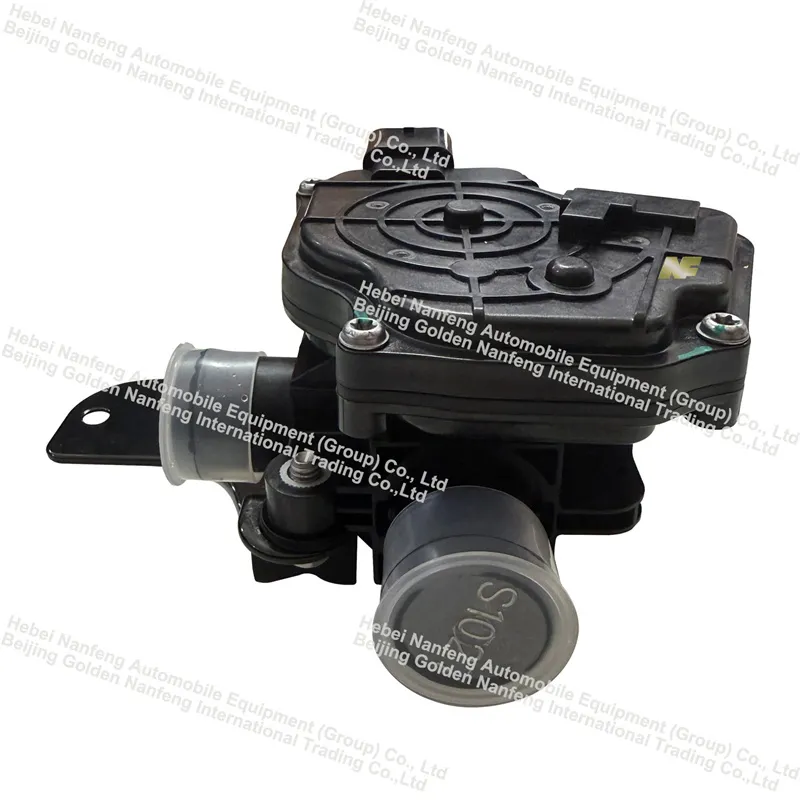
The three-way valve for new energy vehicles is a key actuator in the vehicle's thermal management system, primarily used for controlling the flow direction and distributing coolant, ensuring the battery, motor control system, and air conditioning heat pump operate at optimal temperatures. It typically consists of a valve body, DC motor, reduction gear, valve core, and sealing structure. The valve core is driven to rotate or move via an electronic control signal, enabling the switching and adjustment of different pathways between three interfaces.
Structurally, a three-way valve generally has one inlet and two outlets, or two inlets and one outlet, allowing for single-path, dual-path, and proportional flow regulation depending on thermal management requirements. Compared to valves in traditional gasoline vehicles, three-way valves for new energy vehicles offer faster response, higher control precision, and are resistant to high and low temperatures, vibration, and have a long lifespan, making them adaptable to complex and changing vehicle operating conditions.

Its core function is to coordinate the overall heat distribution of the vehicle. In battery thermal management, it can switch between cooling and heating circuits based on battery status, ensuring the battery operates within the optimal temperature range of 25℃–40℃, thus improving driving range and cycle life. In the motor and electronic control cooling circuits, timely unblocking of heat dissipation channels prevents overheating of the power system, improving operational efficiency and reliability. In air conditioning heat pump systems, three-way valves, in conjunction with the heat pump, enable switching between heating, cooling, and waste heat recovery modes, significantly improving air conditioning performance in winter and reducing energy consumption.
As new energy vehicles develop towards higher voltage, integration, and intelligence, three-way valves are gradually upgrading to integrated valve assemblies and modular thermal management components, becoming a crucial foundational component for improving overall vehicle energy efficiency. Widely used in pure electric, hybrid, and other new energy vehicle models, they are an indispensable core component of the thermal management system, significantly impacting vehicle safety, comfort, and fuel economy.


