

Can an Electronic Water Pump Run "Dry"?
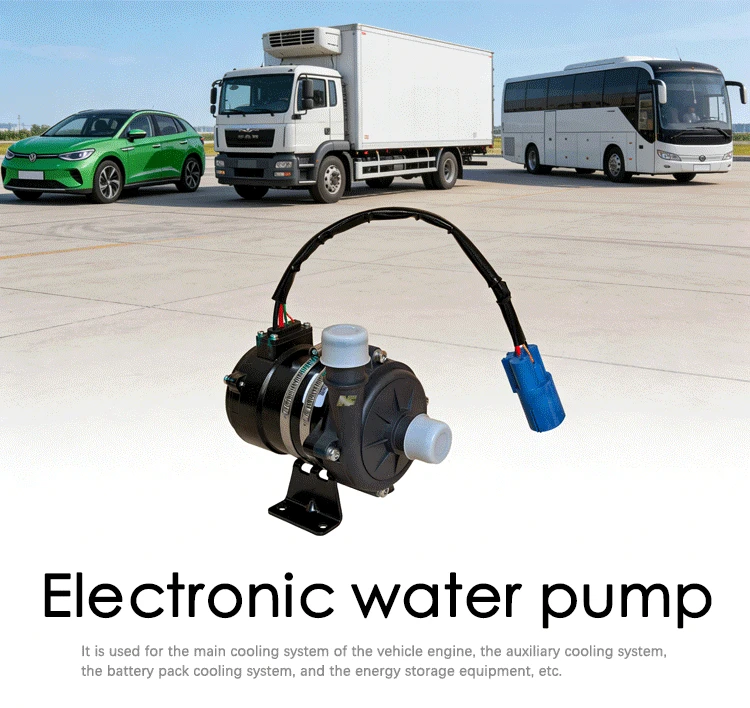
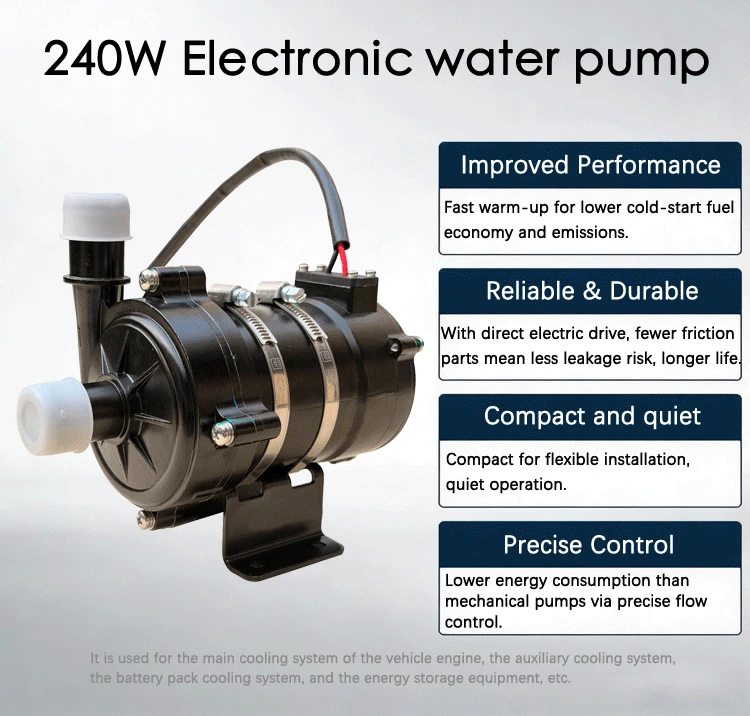
Scope: Canned (sealless) brushless electronic water pumps used in automotive thermal management systems.
Definitions
Dry running: A state where the pump chamber contains virtually no coolant, the friction pairs lack liquid lubrication, and neither the rotor nor the electronic control unit receives cooling from the medium.
Air-locking (gas-binding): A condition where coolant is present in the plumbing but mixed with a significant volume of air bubbles, causing intermittent fluid starvation in the pump chamber; the electrical characteristics in this state are highly similar to those of dry running.
Air-purging mode: A specialized calibration mode intended for maintenance and coolant refilling; this mode operates under a different protection logic than that used during normal vehicle operation.
Core Conclusion
Electronic water pumps are not designed for long-term or continuous dry running. They possess only a limited tolerance for short-term dry running, as specified by relevant standards (e.g., NF standards). This capability is intended solely for fault tolerance and maintenance scenarios-it is not an operational condition for which the pump is designed.
The pump's nominal durability, performance curves, and noise/vibration specifications are all predicated on the pump chamber being filled with the specified coolant, which serves both as a lubricant and a coolant. Dry running is not included in the scope of standard durability testing. Plain bearings (sliding bearings) are the most vulnerable component of an electronic water pump, accounting for over 80% of total product failures. During dry running, the lubricating liquid film vanishes, and the friction pairs transition into "dry friction," leading to a failure rate significantly higher than that under normal, fluid-filled operating conditions.
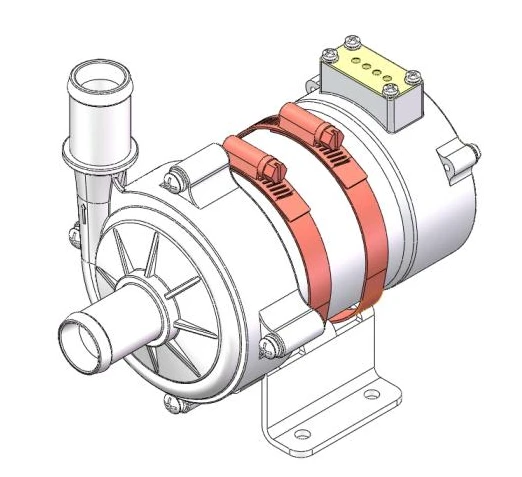
Failure Mechanism During Dry Running
These pumps lack independent mechanical seals; the rotor is suspended within the coolant. The plain bearing friction pairs and the integrated drive board are the primary points of failure during dry running:
1. Loss of lubrication in bearing friction pairs
The graphite bearing sleeve and ceramic shaft rely on the coolant to form a lubricating liquid film. Maintaining this film requires a minimum sliding linear velocity; at very low rotational speeds, the lubrication regime degrades to "boundary lubrication," while dry running results in complete "solid dry friction," causing the wear rate to spike. Even short-term dry running generates wear debris. Continued dry running leads to increased clearances, abnormal noise, and the accumulation of frictional heat, ultimately resulting in the shaft seizing (locking up). Once irreversible wear has occurred, even if the system is refilled with coolant, the risks of vibration, noise, and leakage remain significantly elevated, and the remaining service life of the pump is drastically reduced.
2. Inability to Dissipate Heat
Heat generated by copper and iron losses in the rotor, friction in the bearings, and power components encapsulated on the drive PCB is primarily removed via convection through the coolant. During dry running, heat accumulates and internal temperatures rise rapidly. This can lead to the deformation of the PPS impeller, the aging and failure of rubber seals, the delamination or cracking of encapsulation compounds, and a degradation in the insulating properties of the PCB-potentially resulting in the burnout of the drive chip.
3. "Dry-Run Protection" Does Not Imply Suitability for Long-Term Dry Running
The dry-run protection feature integrated into the drive board serves as a fail-safe mechanism to reduce the likelihood of damage during brief, accidental dry-run events; it is not intended to validate continuous operation under such conditions. Protection responses typically include reducing speed, shutting down the unit, or locking the output. Once a certain time threshold is exceeded, the hardware prevents further operation, overriding any commands from the higher-level Vehicle Control Unit (VCU). It should be noted that protection mechanisms vary significantly depending on the pump architecture: canned (wet-rotor) pumps infer dry-running conditions indirectly by monitoring current or rotational speed, whereas dry-installed pumps can detect a lack of fluid directly via liquid-level switches, inlet pressure sensors, or electrode-based sensors. While the latter offer more precise, calibratable thresholds, the fundamental conclusion remains the same: long-term dry running is strictly prohibited.