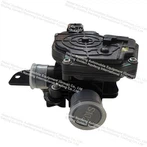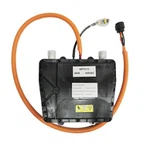


The electric compressor is a core component of the air conditioning system and overall thermal management of new energy vehicles. Simply put, its function is to provide power for the air conditioning cooling cycle, compressing the low-temperature, low-pressure gaseous refrigerant from the evaporator into a high-temperature, high-pressure gaseous state and delivering it to the condenser.
Unlike traditional compressors driven by an engine belt, electric compressors are independently powered by the vehicle's battery, operating as long as the vehicle is powered.

Core Structure: A Precise Three-in-One Integration
The electric compressor is a highly integrated component, mainly composed of three parts: an inverter, a motor, and a compressor.
Inverter: Converts the high-voltage DC power from the battery into the three-phase AC power required by the motor.
Motor: Typically a brushless DC motor, it receives AC power from the inverter to drive the compressor.
Compressor: The core pump component; currently, most new energy vehicles use scroll compressors.
Working Principle: Conversion from Electrical Energy to Cool Air
The electric compressor's workflow is clear and efficient:
Power Supply and Drive: The battery provides high-voltage electricity, which is converted by the inverter to drive the motor.
Refrigerant Compression: The motor drives a scroll mechanism to compress the low-temperature, low-pressure gaseous refrigerant into a high-temperature, high-pressure gaseous state.
Cycle Completion: The high-temperature, high-pressure gas enters the condenser to dissipate heat, becoming a high-pressure liquid. It then passes through an expansion valve to reduce its pressure, and finally absorbs heat and evaporates in the evaporator, achieving refrigeration.
This process is monitored and regulated in real time by sensors and a control system to ensure efficient system operation.

Advantages and Features: Independent, Intelligent, and Highly Efficient
Compared to traditional compressors, electric compressors offer significant improvements in several aspects:
Independent Operation, On-Demand Work: It does not rely on the engine, allowing the air conditioning to operate normally even when the vehicle is parked. Its speed can be steplessly adjusted within the range of 800-7000 rpm, intelligently adjusting according to temperature requirements for greater energy efficiency.
High Efficiency and Energy Saving, Superior Performance: Utilizing a scroll design, it features high efficiency, energy saving, and high reliability. Compared to traditional compressors, it is smaller and lighter, yet has higher volumetric efficiency, smoother operation, and lower noise.
Intelligent Control, Functional Expansion: Built-in CAN bus interface enables real-time communication with other vehicle systems. In addition to cooling the cabin, it also needs to take on the important task of cooling the power battery, making it a key part of the vehicle's thermal management.