

How do new energy vehicle power batteries dissipate heat?
As we all know, the power battery is the heart of an electric vehicle and must be resistant to high temperatures, water, and freezing. Most electric vehicles use lithium batteries as the main raw material for power batteries. Including ternary lithium, lithium iron phosphate, lithium manganate, lithium cobalt oxide, etc. Ternary lithium batteries have higher energy density, small size and light weight, and are the most commonly used in the market.
Why do electric vehicle power lithium battery packs need cooling systems? what is the function?
Since the power battery generates a lot of heat and the battery pack is in a relatively closed environment, the temperature of the battery will rise. The battery module cooling system is a device used for heat dissipation in new energy vehicles. By cooling or heating the power battery, it maintains a better operating temperature of the power battery, thereby improving its operating efficiency and extending the life of the power battery. How to dissipate heat has always been the focus of research on new energy vehicles. Thermal management of new energy vehicle power lithium battery pack systems can be divided into four categories: natural cooling, air cooling, liquid cooling, and direct cooling. Among them, natural cooling is a passive thermal management method, while air cooling, liquid cooling, and DC are active methods. The important difference between the three is the difference in heat exchange medium. Natural cooling does not require additional devices for heat exchange.
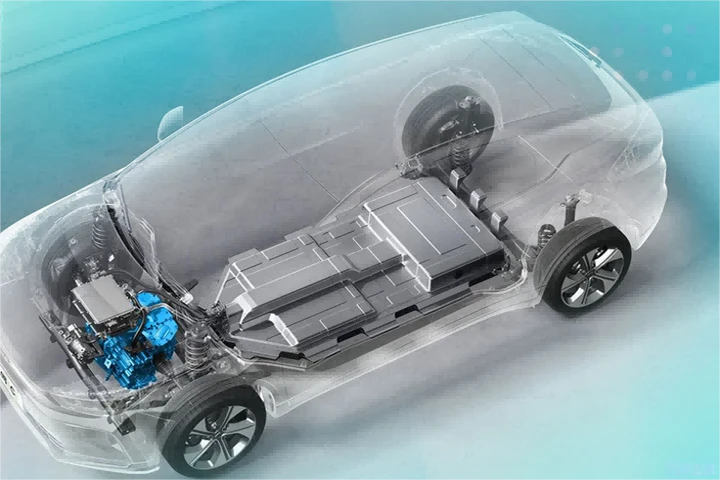
At present, most new energy vehicles use water-cooling for heat dissipation, which has the following advantages:
1. Fast cooling rate, good temperature uniformity, and simple fluid (temperature and flow) control. Liquid cooling technology uses liquid convection heat transfer to take away the heat generated by the battery and reduce the battery temperature.
2. The specific heat capacity of water is three times higher than that of air. The antifreeze of ordinary cars, including new energy vehicles, is an aqueous solution of ethylene glycol. The specific heat capacity at the same temperature is slightly lower than that of pure water, but it is still much higher than that of air.