

The warm baby of electric vehicles-electric heater
According to different heating media, it can be divided into PTC air heaters and PTC coolant heaters. The PTC air heater is distributed in the air-conditioning box, and its heating unit is generally directly exposed to the air. When it is powered on, it directly heats the nearby air, thereby providing heat for the air-conditioning box.
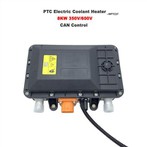
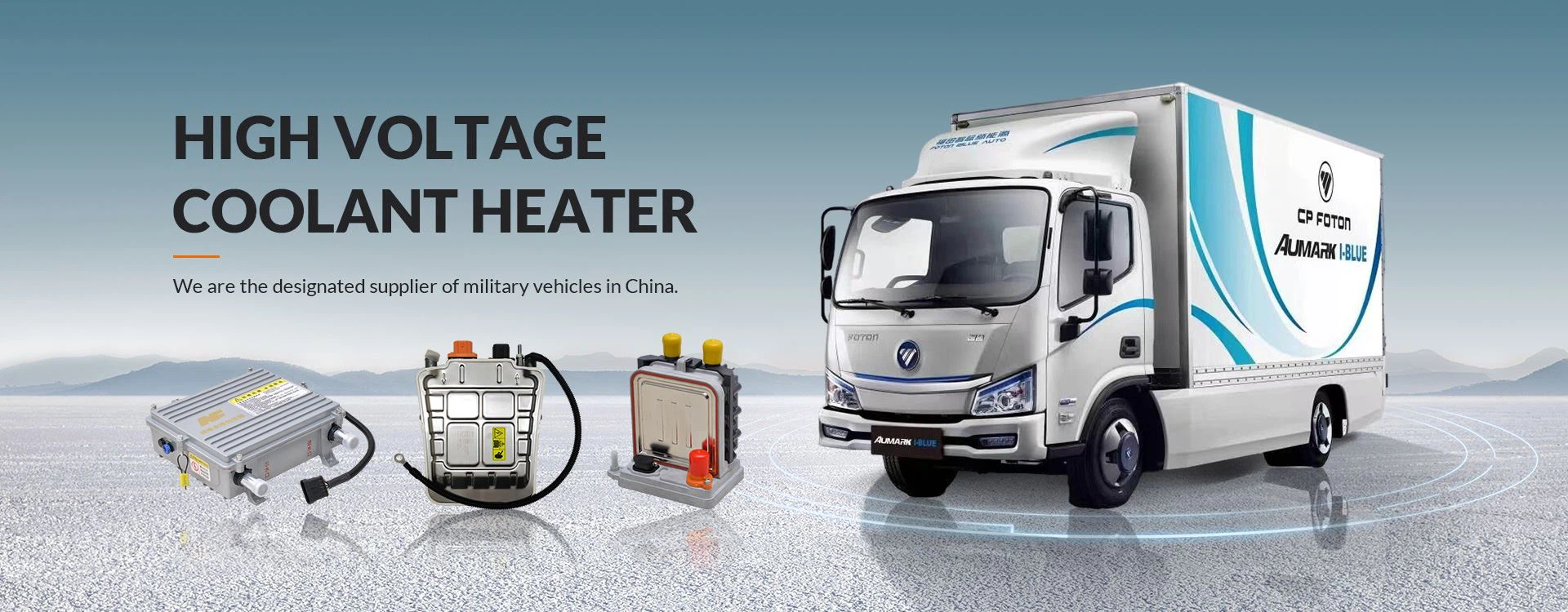
The PTC coolant heater is distributed in the cooling water loop of thermal management, and its heating unit and cooling water loop are separately packaged on the heater. When powered on, the heating unit and cooling water are heated by heat exchange. By heating the cooling water, the purpose of heating the battery and providing heat to the air-conditioning box can be achieved.


According to different heating units, it can be divided into PTC type and constant resistance type.
Among them, PTC (Positive Temperature Coefficient) is literally translated as positive temperature coefficient, that is, the resistance becomes larger as the temperature increases, showing a positive correlation. The material is made of high-purity barium titanate mixed with niobium, bismuth, antimony, lead, manganese, silicon and other oxides and sintered at 1300-1500°C. This kind of heating unit has the advantages of small thermal resistance and high heat exchange efficiency. In addition, this type of unit will not produce redness on the surface like a resistance wire heater under any circumstances. The operating temperature of the heating unit is generally 200-300°C. However, since PTC is a semiconductor, it is difficult to apply in high-voltage environments and can easily be broken down. In addition, the weight and size of the product are also problems.
Constant current group types are divided into resistance wire, thick film resistor and thin film resistor.
The resistance wire heating unit is composed of a metal tube as the outer shell, an alloy electric heating wire as the heating element, and dense magnesium oxide powder or similar insulating material as the insulating medium between the two. This type of unit has the advantages of simple structure and 360° heat dissipation. However, such units not only generate heat but also emit light during the heating process, which leads to reduced heating efficiency and high requirements for temperature-resistant materials. Therefore, the use temperature of resistance wire heating units is generally 300-1200°C.
Thick film resistors use screen printing technology to print insulating dielectric resistors, conductor protective glaze and other materials on the substrate, and then sinter them at high temperatures. The thickness of the heating unit is 1-2mm. Compared with PTC and resistance wire units, thick film units have the smallest weight and optimal volume under the same heat requirements. However, due to the single-sided heat dissipation, there is a risk of overheating in parts of the heating track. The operating temperature of the heating unit is close to that of PTC, generally 200-300°C.
Different from the sintering process of thick film resistors, thin film resistors use a plasma deposition process, which further reduces the thickness of the product. The thickness of the heating unit of the thin film resistor is reduced to less than 1mm. The operating temperature of the heating unit is also reduced to below 200°C. Therefore, thin film resistors are also the most energy-efficient solution available.