
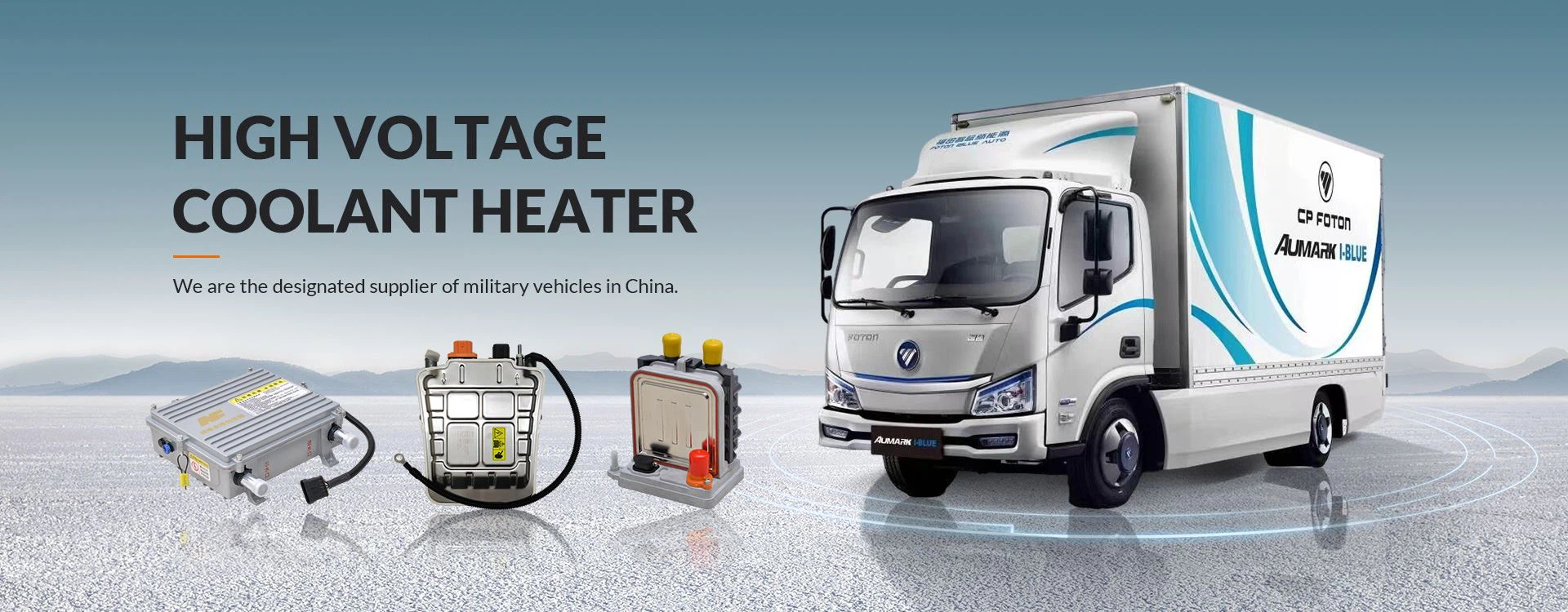


Add A PTC Heater To Your Car
PTC is the abbreviation of "Positive Temperature Coefficient". The engine of a traditional fuel car generates a lot of heat when it starts, and automotive engineers use the engine heat to heat the car, air-conditioning, defrosting, defogging, seat heating, etc. However, in new energy vehicles, the replacement for the engine is an electric motor, which generates more heat in its work than the engine.
However, in new energy vehicles, the replacement of the engine is the motor, and the motor in the work of the heat generated by the engine, less and less; replacement of petrol is the battery, the battery pack in the battery cell is also extremely sensitive to the temperature, but also need a certain temperature environment to ensure that it is safe and effective storage and conversion. Here alone heating, from the point of view of energy conversion, the engine for the gasoline through combustion into thermal energy, thermal energy and then converted into mechanical energy, the motor is electrical energy directly into mechanical energy, from the point of view of the conversion rate, the engine will waste more energy, that part of the energy of course, can not be wasted, in the cold weather, you can be through the air-conditioning system to heating, and the motor generates heat is not enough to have been warmed up the whole car and the battery pack. The heat generated by the motor is not enough to heat the whole car and the battery pack.
But the human body is adapted to a limited temperature, how to do?
Add a "warm air conditioning" PTC heater to the car.


Similar to most electrical heating appliances, such as rice cookers, induction cookers, air conditioners, etc., PTCs also generate a large amount of heat by energising a thermal material such as a resistance wire/ceramic, in order to provide the heat required by the vehicle. If one is not enough, then add another one or increase the power again. Again, even though we have solved the problem of thermal air conditioning in new energy vehicles, a new problem has arisen, excessive power consumption. So that the car itself can run 400 + Km, can only run 200, or even lower mileage. That problem has to be solved ah, automotive engineers have come up with a new approach, heat pump technology.
In fact, the heat pump is not very new, its principle is simply understood as "the hot and cold air out of the move in", that is, hot and cold air "porter", so that the temperature to reach the ideal temperature, in the power consumption can also save more electricity (more than 20%). However, why don't most new energy vehicles use this technology nowadays?

However, why most of the new energy vehicles now do not use this technology?
First, the cost is the host plant is more concerned about the factors, but also why the heat pump is not used in large quantities of the main factors.
From the above models is not difficult to see, all have a common point, that is, "expensive". The current set of heat pump system, the compressor, heat pump, valves, piping, etc., than the cost of ordinary PTC several times higher. So this is why many cars give up this option (which is to give up the range), and choose PTC.
Second, and in addition to the cost, heat pumps are worse in extreme cold weather, and with current technology, they don't run as wide or as reliably. In other words, you installed PTC, low temperature power consumption is high; and you do not install, low temperature, power consumption is low, but the car is freezing cold. If in this case, the design programme under the heat pump + PTC, seems to go against our cost of this perspective. The other option is to add a heater to heat the car and the battery pack by burning fuel in an air-cooled manner. Of course, for environmental issues, we do not recommend, while the cost of heat pump technology, more than ever.
Therefore, new energy vehicles can not add PTC, but to sacrifice the cost to add other systems. So cost and energy consumption is also a pair of contradictory body, how to weigh the relationship between the two, depending on the need!


