

Latest Products


Contact Us
Hebei Nanfeng Automobile Equipment (Group) Co.,Ltd
Phone: +86 18811334770
Tel: +86 0317 8620396
Tel: +86 010 58673556
Candy Jiao
E-mail: nh.jiao@auto-parkingheater.com
Email: nh.li@auto-parkingheater.com
Add: Room 505, Building B, Free Town Center, No.58, East Third Ring South Road, Chaoyang District, Beijing, 100022, P.R.China
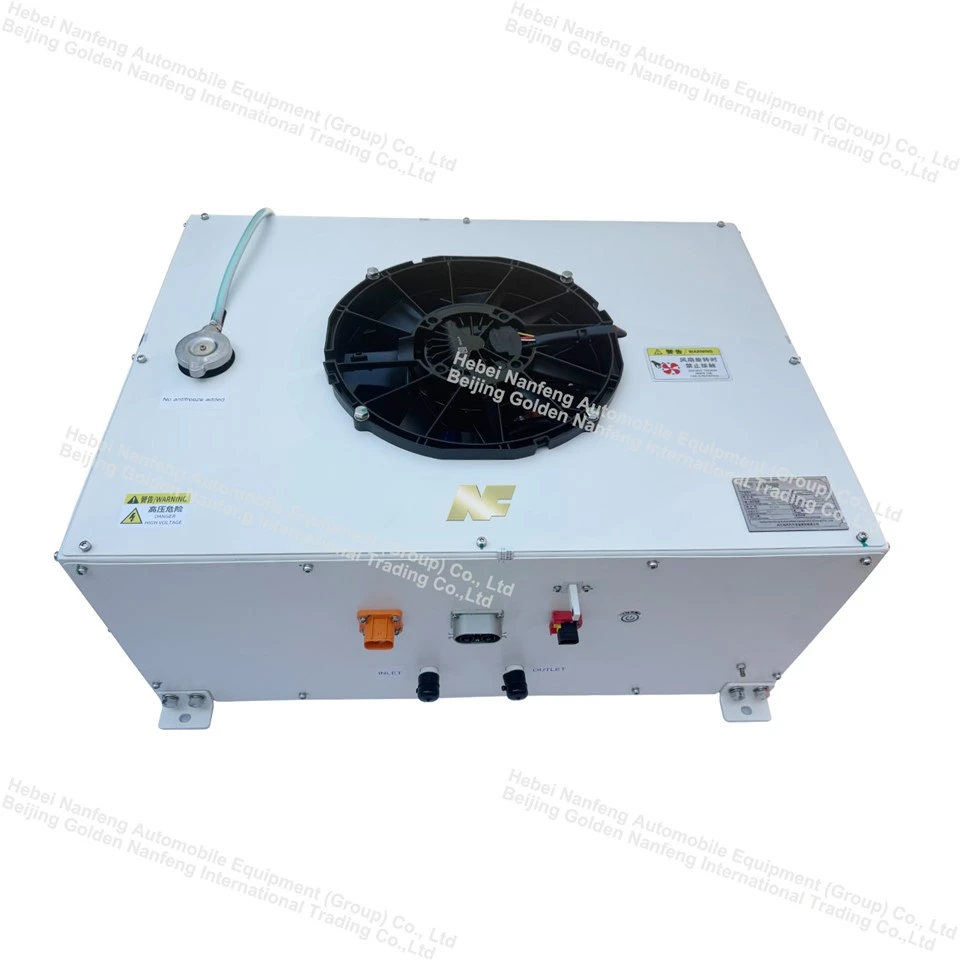

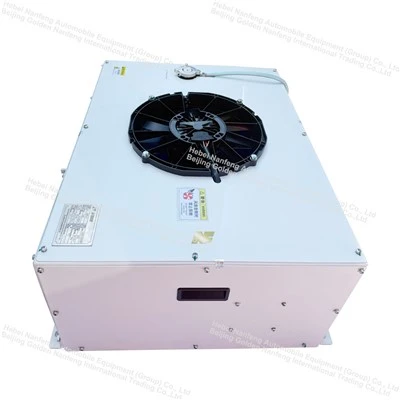
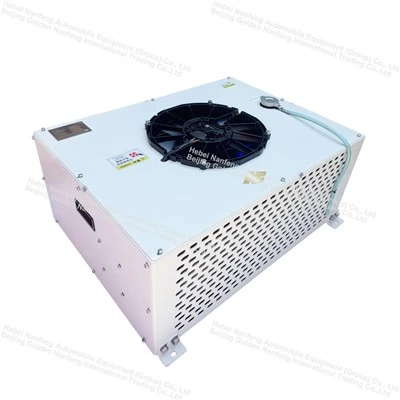
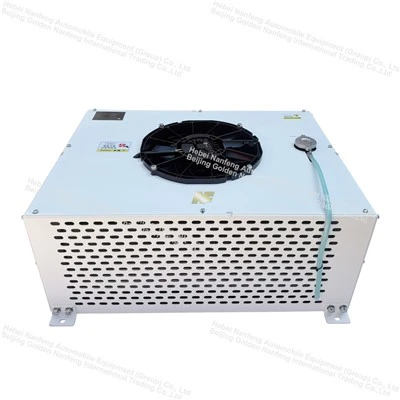
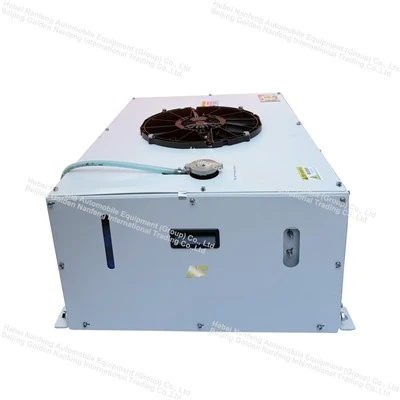
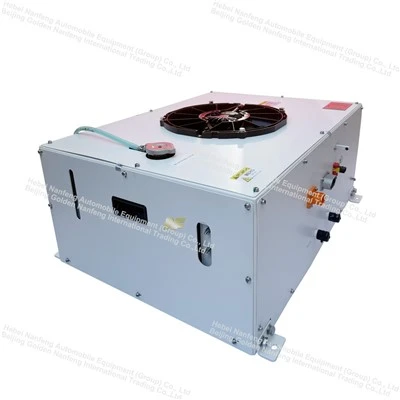
Battery Liquid Cooling Systems
Battery pack thermal management, simply put, is about "temperature control" for the battery. But it's not just about installing a cooler; it's about keeping each cell within a comfortable, uniform, and safe temperature range.
Description
If you're looking for the battery liquid cooling systems, welcome to wholesale the product from our factory. As one of the leading manufacturers and suppliers in China, we will offer you the best service and fast delivery. Now, check the quotation with our seller.
Battery Liquid Cooling Systems
Products Description

| OE NO. | NFEHP6.0-1 |
| Housing color | White |
| Weight | <50kg |
| Operating ambient temperature | -40~50℃ |
| Refrigerant | R134a |
| Coolant | 50%/50% ethylene glycol / aqueous solution |
| High voltage range | 450~720V DC |
| Low voltage range | 16~32V DC |
| Rated cooling / heating capacity | Rated cooling capacity: 7kW, Rated heating capacity: 8kW |
| Inlet filter requirement | A filter with mesh size no less than 30 mesh shall be installed upstream of the system pipeline water inlet |
| Overvoltage protection / Overvoltage recovery | 750/720V DC |
| Undervoltage protection / Undervoltage recovery | 460/480V DC |
| Earthing resistance | Resistance between unit metal housing and earthing terminal <60mΩ |
| Insulation resistance | Apply 1000VDC between high-voltage circuit and unit housing for 60s, resistance ≥100MΩ |
| Ingress protection rating | IP67 |
| Unit foot mounting | Fixed with 4 pcs M10 bolts |
Products Design

Components
1. Integrated Heat Pump Unit (as per your drawings): Provides cold/heat source;
2. Liquid Circuit Components: Water pump, glycol coolant, battery water-cooling plate, filter, piping, vent valve;
3. Electrical Control Components: BMS, unit controller, high and low voltage lines, insulation/grounding protection components;
4. Sensing Components: Temperature and pressure sensors.
Design Considerations
1. Employs a glycol liquid cooling + R134a heat pump solution;
2. During high temperatures, the unit cools, with the coolant carrying away heat from the battery; during low temperatures, the unit heats, preheating the battery.
3. Designed to handle a wide ambient temperature range of -40~50℃, featuring high and low voltage protection, IP67 protection, insulation and grounding safety design, added filters to the piping to prevent clogging, and an exhaust structure to avoid air resistance.
Products application

First, cooling. Batteries generate heat during high-speed driving, high-power discharge, and fast charging. Liquid cooling plates, coolant, and refrigerant heat exchangers dissipate this heat. Most mainstream electric vehicles now rely heavily on liquid cooling because air cooling struggles to handle high energy density and high fast charging rates.
Second, heating. In winter, battery temperatures are low, requiring preheating of the system. Common methods include PTC heating, heat pump waste heat utilization, and motor/electronic control waste heat recovery. Preheating the battery to a suitable temperature range before high-power charging improves charging speed and reduces the risk of damage.
Third, temperature uniformity. Many people only focus on the maximum temperature, but temperature difference is equally important. Large temperature differences between cells will cause the BMS to limit power and capacity based on the weakest temperature component. Good thermal management not only results in faster cooling but also a more uniform temperature distribution throughout the battery pack.
Fourth, integration with the BMS. Thermal management is not an independent system; it must work in conjunction with the battery management system. The BMS determines whether to limit power, activate heating, or initiate cooling based on temperature, SOC, power demand, and charging status. Thermal management hardware provides the capabilities, but the control strategy determines how well it is used.
Product Function

First, safety. The more controllable the battery temperature, the less likely it is to enter dangerous areas.
Second, lifespan. Prolonged exposure to high temperatures and large temperature differences accelerates battery degradation.
Third, performance. The ability to fast charge in winter and maintain high-speed output in summer are both related to thermal management.
Fourth, user experience. When the air conditioning, battery, motor, and electronic control system share heat, the overall vehicle energy consumption will differ significantly.
Therefore, evaluating an electric vehicle's thermal management cannot solely rely on the presence of liquid cooling. It's crucial to consider the cooling plate contact area, flow channel design, heat pump efficiency, low-temperature preheating speed, fast charging temperature rise control, temperature difference control, and overall vehicle energy management.
The goal of battery pack thermal management is not simply to keep it as cold as possible, but to stably maintain the battery within a suitable range under various operating conditions. A well-designed vehicle will not experience power throttling during fast charging in summer, will see less range loss in winter, and will exhibit more controllable long-term degradation.
Products FAQ
Q1: What coolant does the unit use, and can it be replaced with other media?
A: The standard media is 50% ethylene glycol + 50% aqueous solution. It is not recommended to arbitrarily change to other coolants to avoid corrosion of the heat exchanger and piping, affecting heat exchange and antifreeze performance.
Q2: Why should the one-button air vent be used before starting the unit?
A: Air accumulation in the piping can cause air blockage, reducing heat exchange efficiency and causing abnormal water pump noise. Air venting before startup ensures smooth coolant circulation.
Q3: What happens if the unit's high-voltage exceeds the range?
A: Voltage > 750VDC triggers overvoltage protection shutdown; voltage < 460VDC triggers undervoltage protection. Operation will automatically resume after the voltage returns to the normal range.
Q4: What are the requirements for the inlet water filter, and what are the consequences of long-term neglect of maintenance?
A: A filter with a mesh size of ≥30 must be used. Continuous entry of impurities into the circuit can easily clog the heat exchanger and battery water-cooling plate, leading to poor heat dissipation and high-temperature alarms.
Hot Tags: battery liquid cooling systems, China, factory, suppliers, manufacturers, seller, wholesale, quotation
You Might Also Like


