Electric Heaters for New Energy Vehicles:
Technical Details and Product Highlights

I. What are Electric Heaters for New Energy Vehicles?
Electric heaters for new energy vehicles are devices that convert electrical energy into heat energy. They are mainly used for:
Battery preheating at low temperatures: Heating the battery to its optimal operating temperature (15-35℃) in cold environments.
Cabin heating: Replacing traditional engine waste heat to provide a warm environment for passengers.
Defrosting and defogging: Quickly removing frost from the windshield to ensure driving safety.
Based on the heating medium, they are mainly divided into two categories: water-based and air-based.
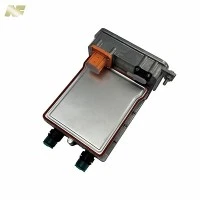
Water-based PTC Electric Heaters (Currently the Mainstream)
Working Principle: Water-based PTC heaters use barium titanate ceramic as the heating element. PTC has a positive temperature coefficient characteristic-low resistance, high current, and rapid heating at low temperatures; when the temperature rises to the Curie point (approximately 80-150℃), the resistance increases sharply, and the power automatically decreases, achieving self-temperature limiting.
Heating Process: The PTC heating element generates heat when energized → Heat is transferred to the aluminum heat dissipation fins → Coolant flows through the fins and absorbs heat → The heated coolant is pumped to the battery liquid cooling plate or the heater core.
Structural Composition:
PTC heating element (ceramic plate + aluminum electrode)
Aluminum heat dissipation strips/corrugated strips (increase heat exchange area)
Aluminum alloy shell (forms water channels)
Temperature sensor (monitors outlet water temperature)
Power control module (adjusts input power)
Key Highlights:
Self-limiting temperature, inherently safe: Automatically reduces power during dry burning, fundamentally preventing overheating and fire.
Mature technology: Over ten years of experience in mass production, high reliability.
Controllable cost: Mature supply chain, suitable for large-scale mass production.

Water-heating thick film heater (next-generation trend)
Working Principle: The thick film heater uses screen printing technology to print rare earth resistance paste (such as RuO₂) onto the surface of a metal substrate (stainless steel/ceramic), which is then sintered at high temperature to form a micron-level heating circuit. Current flowing through the resistive layer generates Joule heating, which is then rapidly conducted through the substrate to the coolant within the flow channels.
Unlike PTC heaters, thick-film heaters do not have built-in temperature limiting; they require a temperature sensor and control system to achieve closed-loop temperature control (accuracy ±1℃).
Structural Composition:
Base Layer (Stainless Steel/Ceramic)
Insulating Dielectric Layer (Glass Glaze)
Resistant Heating Layer (Rare Earth Thick Film Slurry)
Protective Insulating Layer (Glass Glaze)
Housing and Flow Channels
Temperature Sensor + Controller
Key Highlights:
Thermal Efficiency > 95%: 8-10% more energy-efficient than PTC, directly improving range
3-Second Rapid Heating: Instant warmth upon entering the vehicle in winter, no waiting required
30% Smaller Size: High power density, easy chassis layout
Perfectly Compatible with 800V Platforms: Insulation withstand voltage > 4000V, no risk of breakdown
Temperature Control Accuracy ±1℃: Superior battery protection

Air-Powered PTC Electric Heater (Auxiliary Solution)
Working Principle:
The air-powered PTC heater places the PTC ceramic heating element directly within the air duct. Air is directly heated as it flows over the surface of the heating element and then blown into the cabin by a fan.
Structural Components:
PTC ceramic heating element
Heat dissipation fins (increase heat exchange area)
Fan/blower
Housing and air duct
Temperature protector
Key Highlights:
Simple structure, low cost
Fast response, instant heating
Suitable for parking heating scenarios
Limitations:
Cannot heat battery (only heats air)
Relatively low power (1-3kW)