

Overview of Cooling Systems in New Energy Vehicles
I. Overview of Cooling Systems
The cooling system of a new energy vehicle, more accurately described as a thermal management system, has the core task of ensuring that key components such as the battery, motor, and electronic control system operate within their optimal temperature range to guarantee vehicle safety, performance, lifespan, and driving range.
1. Safety: Prevents thermal runaway caused by overheating of the power battery.
2. Performance: Ensures that the electric drive system does not limit power output due to overheating under high loads (such as rapid acceleration and high-speed driving).
3. Lifespan: Maintaining the battery temperature within an ideal range (typically around 30°C) significantly slows down battery capacity degradation.
4. Driving Range: Efficient thermal management reduces energy consumption for heating or cooling and makes rational use of waste heat, thereby increasing actual driving range.

II. Composition and Functions of the Thermal Management System
The thermal management system of a new energy vehicle is typically composed of the following subsystems coupled together:
1. Power Battery Thermal Management System
This is the core and most challenging aspect of the entire system.
(1) Objective: To maintain a uniform battery pack temperature and keep it within its optimal operating window in an external environment ranging from -30°C to 55°C.
(2) Cooling Methods:
① Air Cooling: Simple structure and low cost, but low cooling efficiency and poor temperature uniformity; mainly used in early or low-range models.
② Liquid Cooling: Currently the mainstream solution. Heat exchange occurs through coolant flowing through liquid cooling plates within the battery pack. High efficiency, good temperature uniformity, and supports fast charging and high power output.
③ Direct Cooling (Refrigerant Cooling): Utilizes the air conditioning refrigerant to directly evaporate and absorb heat within the battery pack; the fastest cooling speed, but the system is complex and costly.
(3) Heating Methods:
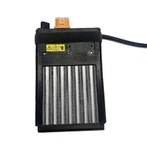
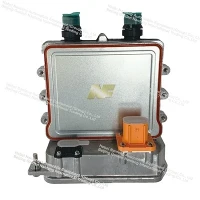
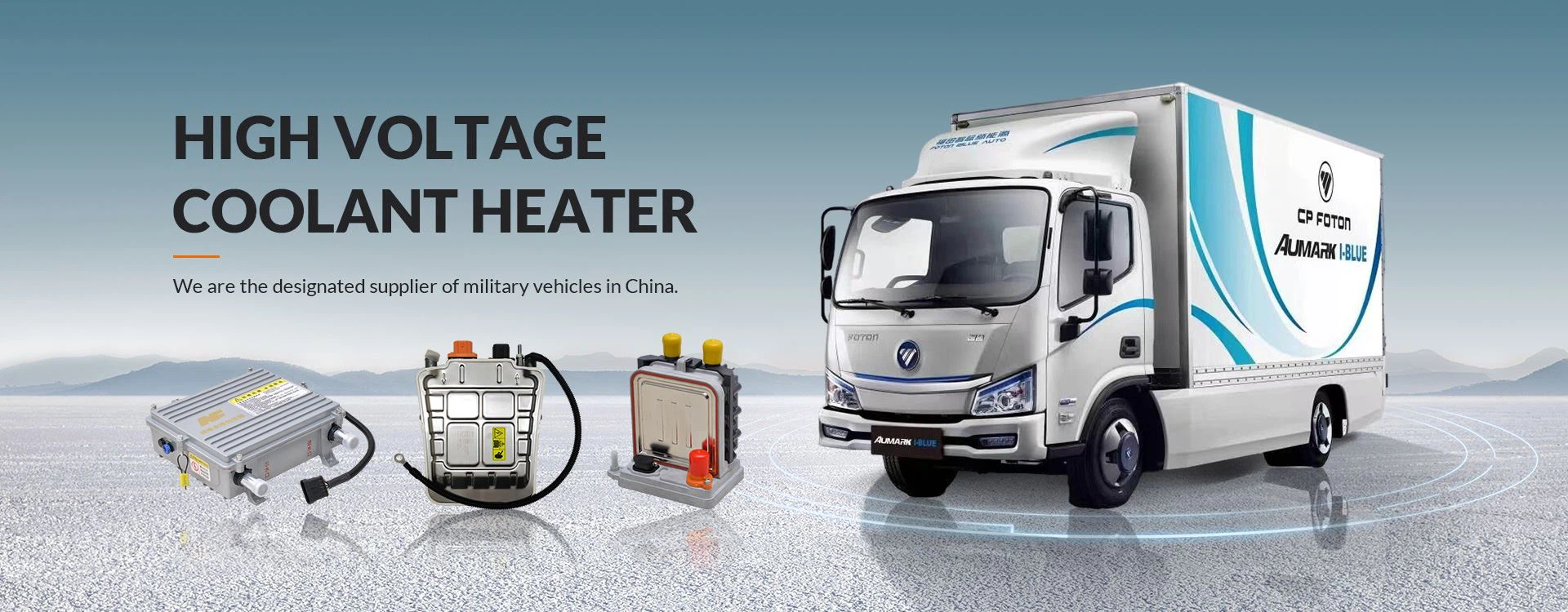
① PTC Heater: Divided into air-heated PTC (heating air) and water-heated PTC (heating coolant). The latter is currently more mainstream and can be integrated with the liquid cooling system.
② Heat Pump Air Conditioning Integration: Absorbs heat from the environment; its energy efficiency ratio is much higher than PTC, making it a key technology for improving winter range.

2. Motor and Electrical Control Thermal Management System
(1) Objective: To dissipate heat from high-power components such as the motor, motor controller (inverter), and on-board charger, preventing performance degradation or damage due to high temperatures.
(2) Method: Mostly liquid cooling is used. It typically shares a coolant circuit with the battery liquid cooling system, but is branched and controlled through valves, heat exchangers, and other components.
3. Air Conditioning (Cockpit) Thermal Management System
(1) Objective: To provide cooling and heating for the passenger compartment.
(2) Cooling: Similar to traditional automobiles, it uses an electric compressor to achieve the cooling cycle.
(3) Heating:
① PTC heating: An early solution, providing fast heating but with extremely high energy consumption, severely impacting winter range.
② Heat pump air conditioning: The current high-end and mainstream development trend. It uses a four-way reversing valve to switch the refrigerant flow, "transferring" heat from the low-temperature outside air to the vehicle interior, achieving an energy efficiency ratio 2-3 times higher than PTC.
III. Main Operating Modes
1. Summer High-Temperature Operation
(1) Battery/motor requires heat dissipation, cabin requires cooling.
(2) The system prioritizes air conditioning for cabin cooling and uses the refrigeration system for efficient battery cooling.
(3) Motor heat is dissipated through a low-temperature radiator.
2. Winter Low-Temperature Operation (No Heat Pump)
(1) Battery requires heating, cabin requires heating.
(2) Primarily relies on a high-power PTC, resulting in extremely high energy consumption and significantly reduced range.
3. Winter Low-Temperature Operation (With Heat Pump + Waste Heat Recovery)
(1) Ideal mode. The heat pump extracts heat from the environment for the cabin.
(2) Waste heat from the electric drive system is collected and prioritized for battery heating; the remaining heat assists cabin heating.
(3) Significantly reduces PTC usage frequency, effectively improving winter range.
4. Fast Charging Operation
(1) High-current charging generates a large amount of heat, requiring active cooling.
(2) The system starts the air conditioner and uses the cooling system to cool the battery to ensure charging speed and safety.