
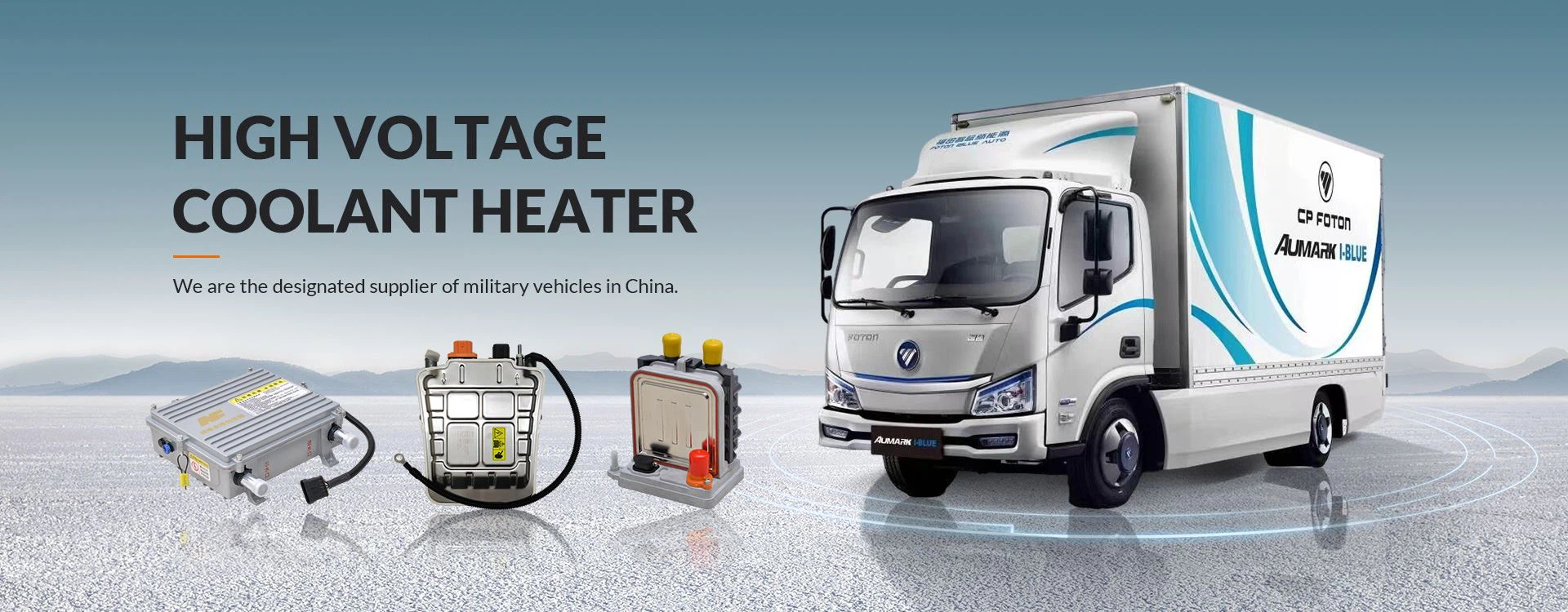


Comparison between PTC electric heater and film heater

PTC electric heater: a mature and stable self-limiting temperature solution
1. Working principle
Self-limiting temperature characteristics: PTC (positive temperature coefficient) ceramic materials have low resistance at low temperatures, large current and fast heating after power is turned on; after the temperature rises, the resistance increases sharply, the power automatically decreases, and the temperature is self-stabilized (the critical point is usually 80–150°C).
Heat transfer method:
Air heating type: cold air flows through the PTC ceramic sheet and is heated, and the fan blows out hot air (suitable for cabin heating).
Water heating type: PTC heats the coolant and heats the battery pack or cabin through the circulation system (higher integration).
2. Core advantages
High safety: automatic power reduction when the temperature exceeds the threshold, no overheating risk (surface temperature ≤ 230°C), and meets the automotive grade fire protection requirements.
Low cost: simple structure, mature mass production, unit price is about 50% of membrane heater.
Strong adaptability: supports 12V/24V low-voltage system, with low requirements for the control circuit.
3. Key defects
Low energy efficiency: The electrothermal conversion efficiency is only 70–80%, and the battery life is reduced by up to 30% when turned on in winter.
Slow response: It takes 28 seconds to reach full power after a cold start, and the low-temperature preheating experience is poor.
Power attenuation: After long-term use, the ceramic material ages, and the power output is unstable.

2. Thermal film electric heater: efficient and accurate next-generation technology
1. Technology classification and principle
Process: Screen printing rare earth resistor slurry on substrate (stainless steel/ceramic), sintering molding.
Heat generation: Current passes through the thick film resistor to generate Joule heat.
Heat transfer: Laminating liquid cold plate to heat coolant, or radiating to heat the battery.
2. Core advantages
Extreme energy efficiency: electrothermal conversion efficiency> 95%, more than 20% energy saving than PTC, significantly extending battery life1.
Ultra-fast response: 30 milliseconds to start, 90% heat output within 10 seconds (such as -30℃ battery preheating only takes 5 minutes).
Long life: no mechanical aging, life> 150,000 hours (PTC only 50,000 hours).
High voltage adaptation: supportsan 800V platform, voltage resistance is better than PTC.
3. Technical challenges
High cost: thick film relies on imported rare earth slurry, thin film lithography process is complex, and the unit price is twice that of PTC.
Thermal uniformity requirements: lack of self-limiting temperature characteristics, an AI algorithm is required to dynamically adjust power to prevent local overheating.
Difficult system integration: need to match the vehicle BMS and heat pump system, the CAN FD communication protocol development threshold is high.
Typical applications: high-end vehicle battery thermal management (such as Zeekr 001 thick film liquid heat), luxury car steering wheel/windshield fast defrosting (thin film integration)


