
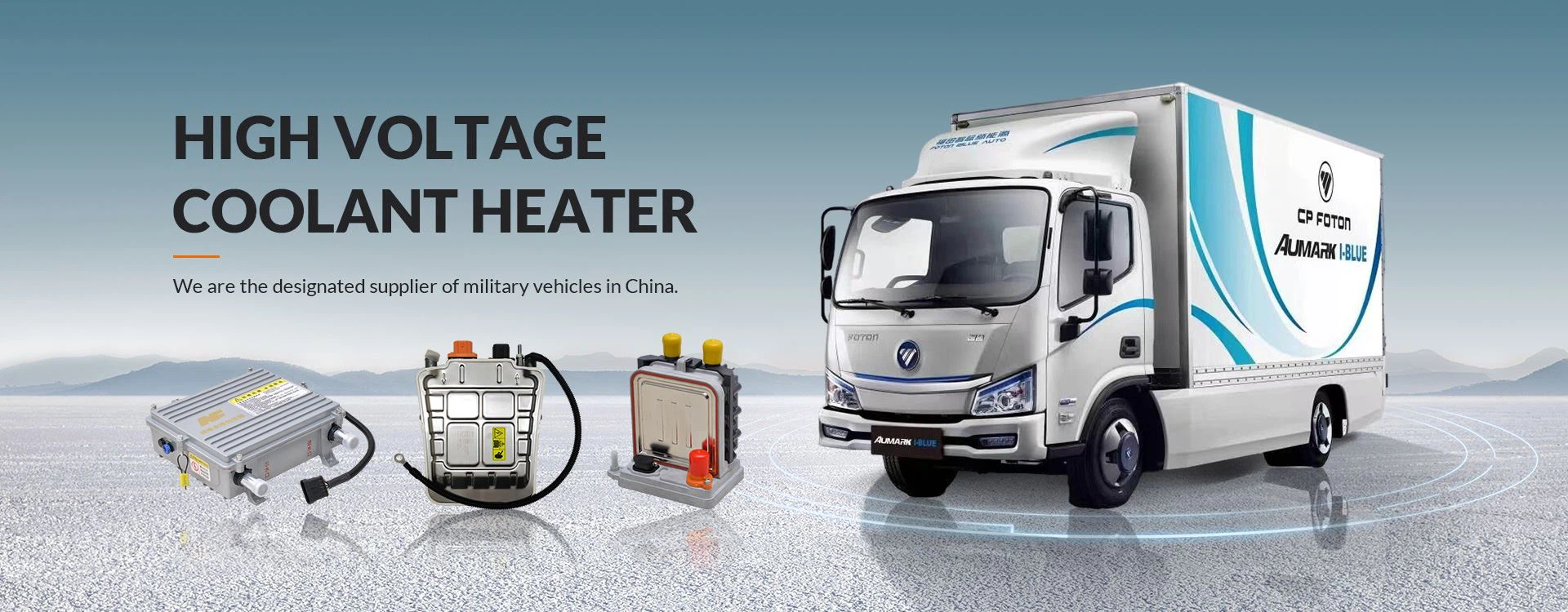


Introduction and functions of new energy vehicle heat exchangers
Heat exchanger is a key component used to transfer heat in new energy vehicles. It is mainly used to transfer and exchange heat between different fluids. It plays an important role in the cooling system, such as transferring heat between the battery cooling system and other key components, ensuring that the temperature inside the system is controlled within an appropriate range. The following is a general introduction to heat exchangers and their role in new energy vehicles
Main effect
Heat Transfer: The main function of a heat exchanger is to transfer heat between two different fluids. In new energy vehicles, a common application is in the battery cooling system, where the heat generated by the battery is transferred to the coolant through a heat exchanger, and then dissipated to the external environment through the cooling system.
Temperature regulation: Heat exchangers help regulate the temperature of different components to ensure that they operate within the appropriate operating temperature range. For example, batteries can be damaged at high temperatures and performance can degrade at low temperatures, and heat exchangers balance the temperatures by transferring heat.
Energy efficiency improvement: By properly configuring the heat exchanger, energy utilization can be optimized and the energy efficiency of the system improved. In some models, heat exchangers are also used to increase the efficiency of motors and electronics.
Main types
Air-liquid heat exchanger: transfers heat between air and liquid. In cars, air is usually introduced through a fan and heat is dissipated through liquid in a liquid cooling system.
Liquid-Liquid Heat Exchanger: Used for heat transfer between cooling liquids. For example, the heat generated by the battery is transferred to a special coolant, and then the heat is taken away through the cooling system.
Phase change material heat exchanger: Use phase change materials to absorb or release heat through a phase change process (such as solid-liquid phase change). This kind of heat exchanger is used in some high-efficiency new energy vehicles.
Working principle
Liquid flow: In a liquid cooling system, the liquid (coolant) flows in the heat exchanger. The heat generated by the battery is transferred to the liquid through thermal conduction.
Air Movement: In an air cooling system, air is introduced into a heat exchanger via a fan or other air movement device, thereby removing heat.
Phase change process: In a phase change material heat exchanger, the phase change material absorbs or releases heat through the phase change process and is used to control the system temperature.
Advantage
Improve system efficiency: Heat exchangers help maintain the right temperature inside the system, making batteries and other critical components more efficient.
Extend battery life: Through effective thermal management, heat exchangers help reduce battery life loss at high temperatures and extend battery life.
Energy Saving and Emission Reduction: The optimized thermal management system helps reduce energy consumption, improves the energy efficiency of the vehicle, and helps reduce exhaust emissions.
Improve vehicle stability: By regulating temperature, heat exchangers help improve the stability of key components such as batteries and motors, ensuring the reliability of vehicles under different working conditions.
Application areas
Electric vehicles: Cooling systems for pure electric vehicles and plug-in hybrid vehicles, especially battery cooling systems.
Electric buses: Cooling systems for electric buses to ensure stable battery and motor performance during urban operations.
Electric Trucks: Cooling systems for electric trucks to adapt to different transportation environments.
Overall, the application of heat exchangers in new energy vehicles makes the entire cooling system more intelligent and efficient, helping to improve vehicle performance and reliability.


