Why do 800V platforms require
more electric water pumps?
The 800V high-voltage platform features significantly higher fast-charging power, more heat-generating components, more granular thermal management zones, and more complex cooling circuits. To achieve independent temperature control, zonal heat dissipation, and safety redundancy, an 800V platform needs more electric water pumps (typically 4–5) than a 400V platform.
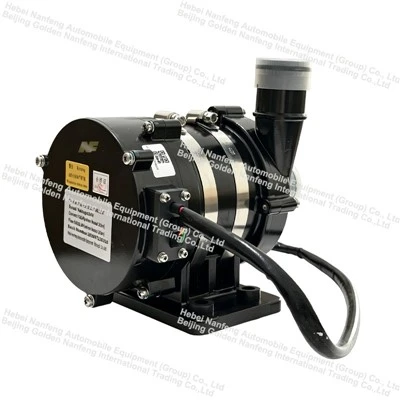
I. Doubled fast-charging power leads to a surge in heat, necessitating multi-circuit, distributed cooling
1. While 400V platforms typically support fast-charging at 60–120 kW, 800V platforms generally reach 200–480 kW. With the charging current remaining constant and the voltage doubling, the power doubles-leading to a substantial increase in heat generation from the On-Board Charger (OBC), DC-DC converter, motor controller, IGBTs, and battery cells.
2. A single, high-flow water pump cannot effectively handle both the "intense, transient heat" generated during fast-charging and the "steady-state heat" produced during normal operation. Instead, multiple pumps and independent circuits are required:
One circuit dedicated to cooling the motor and motor controller.
One circuit dedicated to cooling the battery pack.
One circuit dedicated to cooling the OBC, DC-DC converter, and high-voltage power distribution unit (whereas 400V systems often share 1–2 pumps for these components, 800V systems require 3–4 separate pumps).
II. Upgraded thermal management strategies: More complex heat pump systems and granular, zonal temperature control
800V platforms come standard with high-capacity heat pump systems, enabling:
Preheating the battery in cold temperatures and cooling it in high temperatures.
Recovering waste heat from the motor.
Heating or cooling the vehicle cabin.
Cooling or preheating high-voltage components.
This requires distinct, dedicated pumps for:
The battery cooling circuit.
The drive system cooling circuit.
The heat pump/HVAC circuit.
The high-voltage auxiliary component circuit.
While 400V systems often rely on simple liquid cooling combined with air cooling-involving fewer circuits-800V systems use multi-circuit, coupled thermal management, which inevitably requires more water pumps.
III. As voltage increases, the control logic for water pumps changes, rendering low-voltage water pumps incompatible.
In 400V systems, 12V/24V low-voltage electronic water pumps-characterized by lower power and lower flow rates-are typically used.
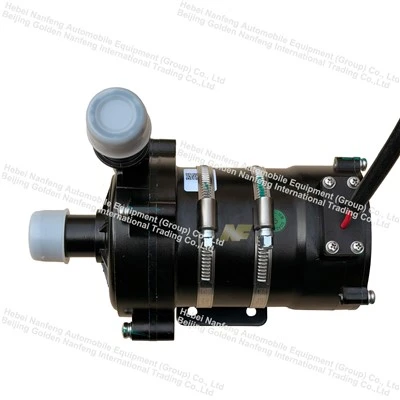
In 800V systems, a combination of high-voltage electronic water pumps and low-voltage auxiliary water pumps is required: the high-voltage pump handles the main circuit, while the low-voltage pump manages smaller components and preheating circuits. Since these two systems operate independently, the total number of pumps naturally increases.